

From Idea To Song: The Complete Guide To Songwriting And Composition On Digital Pianos And Electronic Keyboards
Jul 15, 2026
Leave a message
NASHVILLE - "I have musical ideas in my head, but I don't know how to turn them into complete songs on my digital piano." "What's the best way to develop chord progressions and melodies when composing on an electronic keyboard?" "How do I capture song ideas quickly before I forget them?"
These questions reflect a growing aspiration among keyboard players: moving beyond playing existing songs to creating original music. Songwriting on digital pianos and electronic keyboards offers unique advantages-immediate sound exploration, easy recording, and flexible arrangement capabilities. Yet many players lack clear guidance on the songwriting process, from initial inspiration to finished composition.
We consulted songwriters, composition educators, and successful independent artists across the United States, Europe, and Asia to create a practical, encouraging guide for developing songwriting skills on electronic keyboards. Plus, we highlight the Beisite S-190-a digital piano engineered with creative composition workflows in mind.
🔍 Quick Answer for Searchers:
Yes, you can write complete, compelling songs on your digital piano or electronic keyboard with structured practice and creative exploration. Key steps include: capturing ideas quickly using built-in recording, developing chord progressions that support emotional intent, crafting memorable melodies through repetition and variation, and arranging songs with clear structure. The Beisite S-190 supports songwriting with intuitive layering for texture building, extensive tone library for creative inspiration, MIDI connectivity for DAW integration, and built-in recording for quick idea capture-all at an accessible price point.
Understanding the Songwriting Process: From Spark to Structure
The Creative Cycle: Inspiration, Development, Refinement
What Songwriting Really Is:
Songwriting isn't about waiting for perfect inspiration-it's a craft that combines spontaneous creativity with intentional development. The process typically flows through three phases:
Inspiration Phase: Capturing initial ideas-melodic fragments, chord progressions, lyrical phrases, or emotional concepts. This phase benefits from openness, curiosity, and low-pressure exploration.
Development Phase: Expanding initial ideas into coherent song structures-verses, choruses, bridges-with attention to harmonic progression, melodic development, and lyrical narrative.
Refinement Phase: Polishing arrangements, refining lyrics, and preparing recordings for sharing. This phase benefits from critical listening, feedback, and iterative improvement.
Expert Insight: "Songwriting is both art and craft," explains Dr. Marcus Webb, composition educator at Berklee College of Music. "Inspiration opens the door; craft builds the house. Both are essential for complete songs."
Common Song Structures for Keyboard Composers
Verse-Chorus Structure (Most Common): Verses tell the story and build tension; choruses deliver the emotional payoff and memorable hook. This structure works across genres from pop to rock to country.
Verse-Pre-Chorus-Chorus Structure: Adds a pre-chorus section that builds anticipation before the chorus. This creates dynamic momentum and enhances emotional impact.
AABA Structure (Classic Standard): Two similar verses (A), a contrasting bridge (B), then return to the verse (A). Common in jazz standards and classic pop songwriting.
Through-Composed Structure: Each section is unique with minimal repetition. Ideal for narrative-driven songs or experimental compositions.
Expert Insight: "Structure serves the song, not the other way around," notes Jennifer Lee, songwriting coach. "Learn common forms, then adapt them to serve your creative vision. The best songs feel inevitable, not formulaic."
💡 SEO Tip for Searchers:
Searching for "how to structure a song on keyboard"? Start with verse-chorus structure-it's versatile and forgiving. Focus on making your chorus memorable through repetition and emotional resonance.
Foundation First: Essential Techniques for Keyboard Songwriting
Chord Progressions: The Harmonic Backbone of Your Song
Start with Simple, Effective Progressions:
The I-V-vi-IV progression (C-G-Am-F in C major) powers countless hit songs across genres. Practice this progression in different keys and with varied rhythmic patterns to build familiarity.
The vi-IV-I-V progression (Am-F-C-G) offers a slightly more introspective feel while maintaining accessibility. This progression works well for ballads and emotional pop songs.
Adding Color with Extended Chords:
Once comfortable with basic triads, explore seventh chords (Cmaj7, Dm7, G7) and extended harmonies (C9, Fmaj9). These add sophistication without overwhelming complexity. Practice voicing extended chords with your right hand while maintaining clear bass movement with your left.
Modulation for Emotional Impact:
Learn simple key changes that elevate emotional moments. Modulating up a half-step for the final chorus is a classic technique that creates lift and excitement.
Expert Insight: "Chord progressions are emotional maps," advises Dr. Webb. "Learn which progressions evoke which feelings, then use that knowledge intentionally. Your digital piano's extensive tone library lets you explore harmonic colors instantly."
Melody Writing: Crafting Memorable Musical Lines
The Power of Repetition and Variation:
Great melodies balance familiarity and surprise. Repeat a short motif to establish identity, then vary it rhythmically or harmonically to maintain interest. This technique appears in everything from folk songs to pop hits.
Range and Contour for Emotional Expression:
Consider your melody's range and shape. Ascending lines often convey hope or building tension; descending lines suggest resolution or introspection. Use your electronic keyboard's responsive key action to explore dynamic contours that support lyrical intent.
Lyric-Melody Integration:
When writing with lyrics, ensure melodic rhythm supports natural speech patterns. Stress important words with higher notes or longer durations. Let the emotional content of lyrics guide melodic choices.
Pro Tip: Record melody ideas immediately using your digital piano's built-in recording function. Inspiration is fleeting; capture it before it fades. The Beisite S-190's intuitive recording controls enable quick idea capture without interrupting creative flow.
🔍 Keyword Integration for Searchers:
Searching for "how to write memorable melodies on piano"? Focus on repetition with variation, consider melodic contour for emotional impact, and record ideas immediately. Your electronic keyboard's recording function is your creative safety net.
Level Up: Advanced Songwriting Strategies for Expressive Impact
Arrangement and Texture: Building Dynamic Songs
Using Layering for Emotional Arc:
Your electronic keyboard's layering feature enables instant texture building. Begin verses with sparse textures-perhaps solo piano-then layer strings or pads for choruses to create dynamic contrast. Practice balancing volumes so the primary melody remains clear while layers add supportive color.
Split Mode for Bass-Melody Independence:
Use split mode to play bass lines with your left hand while developing melodies above. This creates the illusion of multiple instruments from a single performance, ideal for solo songwriting demos.
Dynamic Shaping Through Performance:
Plan dynamic shifts intentionally-begin softly to draw listeners in, build intensity for emotional peaks, then resolve to intimacy for closure. Use your digital piano's velocity sensitivity and volume controls to execute these shifts with precision.
Expert Insight: "Arrangement is storytelling through sound," notes Jennifer Lee. "Every textural choice should serve the song's emotional journey. Your keyboard's features enable real-time arrangement decisions that keep creativity flowing."
Lyric Integration: When Words Meet Music
Writing Lyrics That Sing:
Craft lyrics with singable phrasing-avoid tongue-twisters or awkward syllable counts. Read lyrics aloud to test natural rhythm before setting them to melody.
Matching Lyric Emotion to Musical Mood:
Ensure your chord progressions and melodic choices support lyrical content. A melancholic lyric paired with bright major chords creates interesting tension; a hopeful lyric with minor harmonies adds depth.
Collaborative Lyric Writing:
If lyrics aren't your strength, consider collaborating with a lyricist. Many songwriting partnerships thrive on complementary skills-one person crafts music, the other crafts words.
Pro Tip: Keep a lyric journal alongside your musical ideas. Note phrases, images, or emotions that inspire you. When musical inspiration strikes, you'll have lyrical raw material ready to integrate.
💡 Pro Tip for SEO:
Searching for "how to write lyrics for piano songs"? Read lyrics aloud to test rhythm, match emotional content to musical mood, and keep a lyric journal for inspiration. Great songs unite words and music intentionally.
Featured Instrument: Beisite S-190 - Designed for Creative Songwriting
Why the Beisite S-190 Excels for Song Composition
For songwriters seeking an instrument that inspires and supports the creative process, the Beisite S-190 delivers features designed for musical composition.
Songwriting-Friendly Features of the Beisite S-190:
The Beisite S-190 features intuitive layering and split controls that enable quick texture building without menu-diving-essential for capturing spontaneous arrangement ideas during songwriting sessions. With 600+ high-quality tones spanning acoustic pianos, electric pianos, strings, pads, synths, and world instruments, the S-190 provides extensive raw material for creative harmonic and textural exploration.
Responsive weighted keys with adjustable touch sensitivity reward expressive playing, encouraging dynamic nuance and articulation variety essential for compelling song demos. The built-in recording function enables immediate capture of song ideas for later development or sharing with collaborators.
USB-MIDI and Bluetooth connectivity enable seamless integration with notation software, lyric-writing apps, and DAWs that expand creative possibilities. The large LCD display clearly shows active layers, split points, and settings, reducing cognitive load during spontaneous composition decisions.
Real Songwriter Testimonial:
"As someone who writes songs daily, the Beisite S-190 has transformed my workflow. The intuitive layering lets me build arrangements instantly, the extensive tone library inspires new harmonic ideas, and the recording function captures spontaneous melodies I'd otherwise forget. It feels like a creative partner that grows with my songwriting voice." - Alex K., 29, Songwriter and Producer, Portland
Expert Assessment:
"The Beisite S-190 reflects thoughtful design for creative songwriters," notes Dr. Webb, composition educator. "Intuitive controls keep focus on music rather than menus, extensive tones inspire exploration, and responsive action rewards expressive choices. For players developing songwriting voice, it's exceptional value."
Who Should Consider the Beisite S-190 for Songwriting:
Aspiring songwriters beginning their composition journey will appreciate the intuitive layering and extensive tone library that inspire spontaneous exploration. Intermediate songwriters seeking to expand textural and harmonic vocabulary will value the split mode capabilities and responsive key action. Collaborative writers will find the recording function and MIDI connectivity valuable for sharing ideas with lyricists or producers.
Consider Alternatives If:
You require specialized songwriting workstation features like advanced sequencing may want to explore dedicated production keyboards. You prioritize ultra-portability over full 88-key range may prefer compact travel models for spontaneous writing anywhere. You need professional studio connectivity for complex production workflows may prefer instruments with expanded audio/MIDI options.
🔍 Keyword Integration for Searchers:
Searching for "Beisite S-190 for songwriting review"? The S-190's intuitive layering controls, extensive tone library, responsive key action, and recording function make it a compelling choice for songwriters developing their creative voice at an accessible price point.
Practical Workflow: From Idea to Finished Song
The 4-Week Songwriting Development Plan
Week One: Capturing Inspiration Focus on quick idea capture using your digital piano's recording function. Record melodic fragments, chord progressions, or lyrical phrases without judgment. Aim for quantity over quality-inspiration often hides in unexpected moments.
Week Two: Developing Structure Select your strongest ideas from Week One and expand them into verse-chorus structures. Practice transitioning between sections smoothly. Use your electronic keyboard's layering features to add textural contrast between sections.
Week Three: Refining Melody and Lyrics Focus on making your chorus memorable through repetition and variation. Refine lyrics to support melodic rhythm and emotional intent. Record multiple versions to compare approaches.
Week Four: Arrangement and Demo Recording Combine techniques learned throughout the month into a complete song demo. Use your digital piano's features to build dynamic arrangement-sparse verses, layered choruses, strategic bridges. Record a final demo for sharing or further development.
Expert Insight: "Progress in songwriting isn't linear-it's spiral," explains Jennifer Lee. "You'll revisit techniques at deeper levels as your ear and craft develop. Trust the process, celebrate small wins, and keep writing."
Overcoming Creative Blocks: Strategies for When Inspiration Fades
Change Your Physical Environment:
Move to a different room, go for a walk, or change your playing position. Physical movement can unlock mental creativity.
Impose Creative Constraints:
Limit yourself to three chords, write in an unusual time signature, or compose using only black keys. Constraints often spark creativity by forcing new approaches.
Collaborate or Seek Feedback:
Share unfinished ideas with trusted collaborators or mentors. Fresh ears often hear possibilities you've missed.
Expert Insight: "Creative blocks aren't failures-they're invitations to explore differently," notes Dr. Webb. "When one approach stalls, try another. Your digital piano's versatility supports multiple creative pathways."
💡 Pro Tip for SEO:
Searching for "how to overcome songwriter block on keyboard"? Change your environment, impose creative constraints, or seek collaborative feedback. Your electronic keyboard's features support multiple creative approaches when inspiration feels stuck.
Real Stories: Songwriters Who Found Their Voice Through Keyboard Composition
Alex K., 29, Songwriter and Producer, Portland
"I used to wait for 'perfect' inspiration before writing. The Beisite S-190's recording function changed that-I capture ideas immediately, then develop them later. The intuitive layering lets me build arrangements instantly. One year later, I've written 20+ songs and released three. The keyboard didn't make me a songwriter; it removed barriers to my creativity."
Maria S., 34, Hobbyist Songwriter, Madrid
"I always thought songwriting required advanced theory. Then I tried the 4-week framework with my Beisite S-190. The extensive tone library inspired new harmonic ideas, and the split mode let me develop bass-melody independence. Now I write songs for fun-and sometimes they're actually good."
James L., 26, Collaborative Writer, Toronto
"As a lyricist who needed musical partners, I learned basic keyboard composition on my Beisite S-190. The intuitive interface let me focus on songcraft, not technical complexity. Now I co-write regularly, and my musical contributions have grown alongside my lyrics."
Elena T., 41, Returning Creator, Chicago
"I wrote songs as a teen but stopped for decades. Returning through keyboard composition on my Beisite S-190 felt liberating-no pressure to be 'perfect,' just freedom to explore. The creative joy I rediscovered has reignited my love for songwriting."
Frequently Asked Questions (FAQ) - Optimized for Search
❓ Do I need advanced theory to write songs on piano?
No. Many compelling songwriters start with basic chord knowledge and simple melodic ideas. Theory supports creativity but doesn't precede it. Start with what you know, then expand your vocabulary through exploration and listening.
❓ How long does it take to write a complete song?
Timelines vary widely. Some songs emerge in one inspired session; others develop over weeks or months. Focus on consistent creative practice rather than arbitrary deadlines. A simple, heartfelt song completed is more valuable than a complex, unfinished masterpiece.
❓ What if my song ideas feel unoriginal?
This is normal and part of the process. Every songwriter borrows from influences before finding their unique voice. Focus on authentic expression rather than novelty. Your perspective, voice, and emotional intent make your songs uniquely yours.
❓ Can I write songs on any digital piano or electronic keyboard?
Yes, but features matter. Instruments with intuitive layering, extensive tone libraries, responsive key action, and recording capabilities support creative songwriting more effectively. The Beisite S-190 offers these songwriting-friendly features alongside professional performance capabilities.
❓ Is the Beisite S-190 suitable for songwriting and composition?
Yes, exceptionally. The Beisite S-190 offers intuitive layering and split controls for arrangement exploration, 600+ tones for creative harmonic inspiration, responsive weighted keys that reward expressive playing, and built-in recording function for capturing spontaneous ideas-all at an accessible price point for creative growth.
💡 Pro Tip for SEO:
Searching for "best keyboard for songwriting"? Prioritize intuitive controls, extensive tone options, responsive key action, and recording capabilities. The Beisite S-190 delivers these songwriting essentials alongside professional performance features.
The Bigger Picture: Songwriting as Lifelong Creative Practice
Songwriting isn't a destination-it's a way of engaging with music that deepens with time. Every song, every experiment, every moment of intentional choice builds your artistic voice.
Expert Insight: "Songwriting teaches us to listen deeply," reflects Dr. Webb. "To hear not just notes, but emotion, story, and possibility. That practice transforms not just your playing, but your relationship with creativity itself."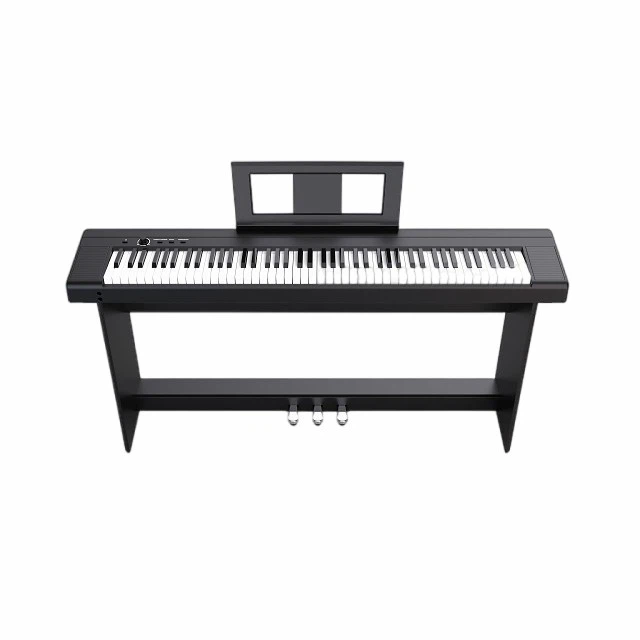
Final Thought: Your Song, Your Voice, Your Journey
You don't need perfect technique, advanced theory, or special permission to begin songwriting. You need curiosity, courage, and the willingness to create.
Whether you're crafting simple melodies over basic progressions or weaving complex arrangements with layered sounds, every intentional choice matters. Your digital piano or electronic keyboard is an invitation-to express, to explore, to create.
As one songwriter shared on Reddit's r/Songwriting:
"I used to think songwriting required genius. Then I started small-one chord, one melody, one phrase at a time. My Beisite S-190's intuitive controls and extensive tones made exploration joyful. Now songwriting feels like breathing-natural, expressive, alive. The songs were in me all along; I just needed permission to let them out."
Your songwriting journey awaits. Start simple. Listen deeply. Create freely.
📧 Reader Engagement
What songwriting techniques have unlocked your creative voice on your digital piano or electronic keyboard? What questions do you have about developing your songwriting craft? Share your insights at jjbet01@beisite-tech.com. Selected stories and expert responses will be featured in upcoming issues.