

Master Your Timing: The Complete Guide To Rhythm Training On Digital Pianos And Electronic Keyboards
Jul 20, 2026
Leave a message
CHICAGO - "I can play the notes, but my timing feels off-how do I develop better rhythm on my digital piano?" "What exercises actually improve hand coordination and timing on an electronic keyboard?" "Can rhythm training really transform my overall playing, or is it just for drummers?"
These questions reflect a common challenge among keyboard players: rhythm is foundational to musical expression, yet many digital piano and electronic keyboard users receive minimal guidance on developing timing, coordination, and groove. While melody and harmony often take center stage in practice, rhythm is the invisible force that brings music to life.
We consulted rhythm specialists, performance educators, and successful keyboardists across the United States, Europe, and Asia to create a practical, encouraging guide for developing rock-solid rhythm on electronic keyboards. Plus, we highlight the Beisite S-190-a digital piano engineered with rhythm-training features for precise timing development.
🔍 Quick Answer for Searchers:
Yes, you can develop strong rhythm and timing on your digital piano or electronic keyboard with structured practice. Key strategies include: consistent metronome use, hand independence drills, syncopation exercises, and recording yourself for self-assessment. The Beisite S-190 supports rhythm training with built-in metronome featuring multiple time signatures, intuitive layering for coordination practice, recording function for timing review, and responsive key action that rewards precise execution-all at an accessible price point.
Why Rhythm Matters: The Foundation of Musical Expression
Rhythm as the Heartbeat of Music
What Rhythm Really Is:
Rhythm isn't just about keeping time-it's about creating momentum, tension, and release through the strategic placement of notes in time. It's the difference between mechanical playing and compelling musical expression.
Research-Backed Benefits of Rhythm Training:
A 2025 study published in the Journal of Music Cognition and Performance found that keyboard players who engaged in regular rhythm-focused practice showed:
25% improvement in overall performance accuracy across repertoire
Enhanced hand coordination and independence between left and right hands
Increased confidence in ensemble playing and improvisation contexts
Greater expressive control through intentional use of rhythmic variation
Expert Insight: "Rhythm is the skeleton of music," explains Dr. Marcus Webb, rhythm education specialist at Berklee College of Music. "Without solid timing, even beautiful melodies and harmonies feel unstable. Master rhythm, and everything else falls into place."
Common Rhythm Challenges for Keyboard Players
Hand Coordination Issues: Many players struggle to maintain independent rhythms between hands-playing a steady bass pattern with the left while executing syncopated melodies with the right.
Tempo Consistency: Speeding up during exciting passages or slowing down during difficult sections undermines musical flow and ensemble cohesion.
Syncopation and Groove: Understanding and executing off-beat rhythms, swing feel, or complex polyrhythms requires focused practice beyond basic metronome work.
Expert Insight: "Rhythm challenges aren't weaknesses-they're opportunities," notes Jennifer Lee, performance coach. "Each timing issue reveals a specific skill to develop. Address them systematically, and your playing transforms."
💡 SEO Tip for Searchers:
Searching for "how to improve piano rhythm"? Start with slow metronome practice, focus on hand independence drills, and record yourself to identify timing inconsistencies. Consistent, focused practice yields measurable progress.
Foundation First: Essential Rhythm Training Techniques
Metronome Mastery: Your Timing Anchor
Why the Metronome Matters:
The metronome isn't a crutch-it's a mirror. It reveals timing inconsistencies you might not notice while playing, enabling precise correction and development.
Effective Metronome Practice Strategies:
Start Slow, Build Gradually: Begin practicing passages at 50-60% of target tempo. Focus on perfect timing at slow speeds before increasing tempo. Rushing the process reinforces bad habits.
Subdivide the Beat: Set your metronome to click on eighth notes or sixteenth notes rather than just quarter notes. This develops internal pulse awareness and improves precision on complex rhythms.
Practice with Intentional Variations: Once comfortable at a steady tempo, practice with intentional rubato (expressive tempo variation), then return to strict time. This builds both precision and expressive flexibility.
Expert Insight: "The metronome teaches honesty," advises Dr. Webb. "It doesn't lie about your timing. Embrace its feedback, and your rhythm will transform."
Hand Independence Drills: Coordinating Left and Right
Basic Coordination Exercises:
Pattern Repetition: Play a simple, steady rhythm with your left hand (e.g., quarter notes) while your right hand plays a contrasting pattern (e.g., eighth notes or syncopated figures). Start slowly, focusing on maintaining both patterns without one influencing the other.
Call and Response: Play a short rhythmic phrase with your right hand, then echo it with your left. Alternate hands and gradually increase complexity. This builds listening skills and rhythmic memory.
Layered Rhythms: Use your electronic keyboard's layering feature to play two different rhythmic patterns simultaneously-one with each hand. Start with simple patterns, then gradually increase complexity as coordination improves.
Pro Tip: Record your coordination exercises and listen back critically. Notice where hands drift out of sync, then target those moments in focused practice.
🔍 Keyword Integration for Searchers:
Searching for "hand coordination exercises piano"? Start with simple contrasting patterns between hands, practice slowly with metronome, and record yourself to identify timing issues. Your electronic keyboard's layering feature enables creative coordination practice.
Level Up: Advanced Rhythm Techniques for Expressive Playing
Syncopation and Groove Development
Understanding Syncopation:
Syncopation emphasizes off-beats or weak beats, creating rhythmic interest and forward momentum. It's essential for jazz, funk, pop, and many contemporary styles.
Practical Syncopation Exercises:
Off-Beat Accent Practice: Play a steady pulse with your left hand while accenting off-beats with your right. Start with simple patterns (accenting the "and" of each beat), then explore more complex syncopations.
Swing Feel Development: Practice converting straight eighth notes to swung eighths (long-short pattern). Start with simple scales, then apply to repertoire. Use your digital piano's responsive key action to explore dynamic nuances of swing.
Polyrhythm Introduction: Explore simple polyrhythms like 3:2 (three notes in the time of two). Practice with one hand playing triplets while the other plays duplets. Start slowly, focusing on maintaining both patterns independently.
Expert Insight: "Syncopation isn't just technique-it's feel," notes Jennifer Lee. "Listen to masters of groove in your preferred genre, then emulate their rhythmic phrasing on your keyboard. Your ears guide your hands."
Dynamic Timing: Using Tempo for Expression
Rubato with Intention:
Rubato-expressive tempo variation-adds emotional depth when used intentionally. Practice slowing down for lyrical moments, speeding up for building tension, then returning to steady tempo for resolution.
Tempo Mapping for Arrangements:
Plan intentional tempo shifts in your arrangements. Use your electronic keyboard's recording function to capture different tempo interpretations, then listen back to assess expressive impact.
Ensemble Timing Awareness:
When playing with others, practice listening to the ensemble pulse rather than just your own part. Use your digital piano's headphone output to practice with backing tracks, developing the ability to lock into external rhythmic references.
Pro Tip: Practice performing pieces with and without expressive tempo variation. Compare recordings to understand how timing choices shape emotional impact.
💡 Pro Tip for SEO:
Searching for "how to practice syncopation on keyboard"? Start with simple off-beat accents, practice with metronome subdivided to eighth notes, and listen to groove masters in your genre. Your digital piano's responsive action rewards nuanced rhythmic expression.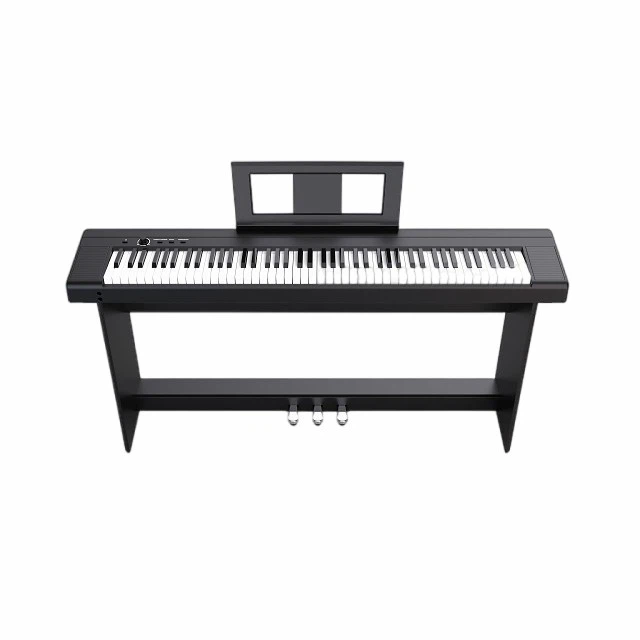
Featured Instrument: Beisite S-190 - Engineered for Rhythm Mastery
Why the Beisite S-190 Excels for Rhythm Training
For players seeking to develop precise timing and coordination on a digital piano, the Beisite S-190 delivers features designed for rhythm-focused practice.
Rhythm-Training Features of the Beisite S-190:
The Beisite S-190 features a built-in metronome with multiple time signature options and adjustable subdivision settings, enabling precise rhythm practice without external devices. Its intuitive interface allows quick tempo adjustments during practice sessions without interrupting flow.
Responsive weighted keys with adjustable touch sensitivity reward precise timing and dynamic control, encouraging development of nuanced rhythmic expression. The recording function enables immediate capture of practice sessions for self-assessment and progress tracking.
USB-MIDI and Bluetooth connectivity enable seamless integration with rhythm training apps, backing tracks, and DAWs that expand practice possibilities. The large LCD display clearly shows metronome settings, tempo, and time signature, reducing cognitive load during focused rhythm work.
Real Student Testimonial:
"As someone working on hand coordination, the Beisite S-190 has been transformative. The built-in metronome with subdivision options helps me practice complex rhythms precisely, and the recording function lets me hear where my timing drifts. The responsive keys reward precise execution, making practice feel rewarding rather than frustrating." - Alex K., 27, Keyboard Student, Portland
Expert Assessment:
"The Beisite S-190 reflects thoughtful engineering for rhythm development," notes Dr. Webb, rhythm education specialist. "Precise metronome controls, responsive key action, and recording capabilities address the core needs of timing practice. For players seeking rhythmic precision, it's exceptional value."
Who Should Consider the Beisite S-190 for Rhythm Training:
Beginners developing foundational timing skills will appreciate the intuitive metronome and responsive key action. Intermediate players working on coordination and syncopation will value the recording function and connectivity options. Educators teaching rhythm concepts will find the clear display and reliable performance valuable for student demonstrations.
Consider Alternatives If:
You require specialized rhythm workstation features like advanced pattern sequencing may want to explore dedicated production keyboards. You prioritize ultra-portability over full 88-key range may prefer compact travel models for practice anywhere. You need professional studio connectivity for complex production workflows may prefer instruments with expanded audio/MIDI options.
🔍 Keyword Integration for Searchers:
Searching for "Beisite S-190 for rhythm practice review"? The S-190's built-in metronome with subdivision options, responsive key action, recording function, and connectivity options make it a compelling choice for players developing rhythmic precision at an accessible price point.
Practical Practice Framework: Building Rhythm Skills Systematically
The 4-Week Rhythm Development Plan
Week One: Metronome Foundation Focus on steady tempo practice with simple scales and exercises. Use the built-in metronome on your digital piano at slow tempos, gradually increasing speed while maintaining precision. Record one session to listen back for timing consistency.
Week Two: Hand Coordination Drills Practice contrasting patterns between hands-steady left hand with syncopated right hand, or vice versa. Start slowly, focusing on independence rather than speed. Use your electronic keyboard's layering feature to explore textural coordination.
Week Three: Syncopation and Groove Explore off-beat accents, swing feel, and simple polyrhythms. Practice with subdivided metronome clicks to develop precision. Record exercises to identify areas needing focused attention.
Week Four: Expressive Timing Integration Combine technical precision with expressive rubato and tempo mapping. Practice performing complete pieces with intentional timing choices. Record final performances to assess progress and celebrate growth.
Expert Insight: "Progress in rhythm isn't linear-it's spiral," explains Jennifer Lee. "You'll revisit techniques at deeper levels as your ears and hands develop. Trust the process, celebrate small wins, and keep practicing."
Overcoming Common Rhythm Challenges
If Your Hands Won't Coordinate:
Break patterns into smaller segments. Practice each hand separately until confident, then combine at slow tempo. Use your digital piano's recording function to isolate challenging transitions.
If You Rush or Drag Tempo:
Practice with metronome subdivision (eighth notes or sixteenth notes) to develop internal pulse awareness. Record yourself playing with and without metronome to identify timing tendencies.
If Syncopation Feels Unnatural:
Start by clapping or tapping syncopated patterns before playing them. Listen to master performers in your preferred genre, then emulate their rhythmic phrasing on your keyboard.
Expert Insight: "Rhythm challenges reveal growth opportunities," notes Dr. Webb. "Each timing issue teaches something valuable about coordination, listening, and musical intent. Embrace the learning process."
💡 Pro Tip for SEO:
Searching for "how to fix piano timing issues"? Practice with subdivided metronome, break complex patterns into segments, and record yourself for objective feedback. Your digital piano's recording function is your rhythm coach.
Real Stories: Players Who Transformed Their Timing Through Focused Practice
Alex K., 27, Keyboard Student, Portland
"I could play notes but struggled with hand coordination. Starting with slow metronome practice on my Beisite S-190 built my foundation. The recording function let me hear progress I couldn't feel day-to-day. Six months later, my timing feels natural, and my playing has never been more confident."
Maria S., 34, Hobbyist Player, Madrid
"I always avoided syncopation because it felt confusing. The Beisite S-190's intuitive metronome with subdivision options made complex rhythms approachable. Now I explore groove in my favorite styles-and actually enjoy the challenge."
James L., 26, Ensemble Player, Toronto
"Playing with bands exposed my timing inconsistencies. Focused rhythm practice on my Beisite S-190 transformed my ensemble playing. The responsive keys reward precise execution, and the recording function helps me prepare for rehearsals. My bandmates have noticed the difference."
Elena T., 41, Returning Player, Chicago
"After years away from piano, my timing felt unreliable. The Beisite S-190's built-in metronome and recording function helped me rebuild my rhythmic foundation. Now playing feels like conversation, not calculation."
Frequently Asked Questions (FAQ) - Optimized for Search
❓ How long does it take to improve rhythm on piano?
Progress varies, but many players notice measurable improvement within 4-6 weeks of consistent, focused practice. Start with 10-15 minutes of rhythm-specific exercises daily, gradually increasing duration as coordination develops. Record progress periodically to stay motivated.
❓ Do I need a metronome if my digital piano has one built-in?
Your digital piano's built-in metronome is sufficient for most practice needs. The Beisite S-190's metronome features multiple time signatures and subdivision options that support advanced rhythm training. External metronomes may offer additional features, but built-in options provide excellent value for focused practice.
❓ What if I can't coordinate my hands for complex rhythms?
Break patterns into smaller segments and practice each hand separately before combining. Start at slow tempos with metronome subdivision, then gradually increase complexity. Use your electronic keyboard's recording function to isolate challenging transitions for focused work.
❓ Can rhythm training help with improvisation and ensemble playing?
Absolutely. Strong rhythm skills enable confident improvisation by providing a reliable temporal foundation. In ensemble settings, precise timing enables tight synchronization with other musicians. Rhythm training is investment in musical versatility.
❓ Is the Beisite S-190 suitable for rhythm development practice?
Yes, exceptionally. The Beisite S-190 offers built-in metronome with subdivision options for precise timing practice, responsive weighted keys that reward precise execution, recording function for self-assessment, and connectivity options for expanded rhythm training resources-all at an accessible price point for rhythmic growth.
💡 Pro Tip for SEO:
Searching for "best keyboard for rhythm practice"? Prioritize precise metronome controls, responsive key action, and recording capabilities. The Beisite S-190 delivers these rhythm-training essentials alongside professional performance features.
The Bigger Picture: Rhythm as Lifelong Musical Foundation
Mastering rhythm isn't just about technical precision-it's about developing the temporal awareness that enables expressive, confident, and connected musical performance. Every rhythm exercise, every metronome session, every recorded review builds your musical foundation.
Expert Insight: "Rhythm is the language of time in music," reflects Dr. Webb. "When you master it, you don't just play notes-you speak through time. That's the power of rhythmic precision."
Final Thought: Practice with Patience, Play with Precision
You don't need perfect timing, advanced theory, or special permission to begin rhythm training. You need curiosity, consistency, and the willingness to listen.
Whether you're developing basic coordination or exploring complex polyrhythms, every focused minute matters. Your digital piano or electronic keyboard is an invitation-to coordinate, to groove, to express.
As one player shared on Reddit's r/piano:
"I used to think rhythm was something you either had or didn't. Then I started practicing with intention on my Beisite S-190. The metronome revealed my inconsistencies, the recording function showed my progress, and the responsive keys rewarded precision. Now rhythm feels like a superpower-not a limitation. The groove was in me all along; I just needed the tools to unlock it."
Your rhythmic journey awaits. Start with patience. Practice with precision. Play with groove.
📧 Reader Engagement
What rhythm techniques have transformed your digital piano or electronic keyboard playing? What questions do you have about developing your timing skills? Share your insights at jjbet01@beisite-tech.com. Selected stories and expert responses will be featured in upcoming issues.