


Portable Digital Piano For Practice-factory
Description
Technical Parameters
What Is Portable Digital Piano For Practice?
If you are a piano enthusiast who wants to practice your skills anywhere and anytime, you might be interested in getting a portable digital piano. A portable digital piano is a type of electronic keyboard that mimics the sound and feel of an acoustic piano, but is much lighter and more compact. Unlike a regular digital piano, which is usually fixed on a stand and has built-in speakers, a portable digital piano can be easily carried around and connected to headphones or external amplifiers.
BEISITE: Wholesale Portable Digital Piano For Practice Manufacturer
Experienced Company
Jinjiang Beisite Electronic Technology Co., Ltd was established in 2012 and is an experienced company. Our annual production capacity is 80000 cartons. With an export license, we export products to Europe, America, Southeast Asia, and the Middle East. Our products gain wide praise at home and abroad.
Superior Quality
Quality is a priority at Beisite. All digital piano developed and manufactured by Beisite leaves the factory fully calibrated according to the most stringent industrial standards in force today. Our Certificates include FCC, EMC, Rosh, LVD, CE, PSE, etc.
Advanced Equipment
We not only have professional workers but also have the continuous updating of hardware equipment. Such as advanced facilities of an automatic Plug-in Machine, Automatic Welding Machine, High-Pressure Tester, High-Temperature Tester, and Vibration Tester.
After-Sale Service
We promise to provide customers with one year of after-sales support. Our sales team will try our best to give good after-sale service, handle customer complaints, and solve problems for customers.

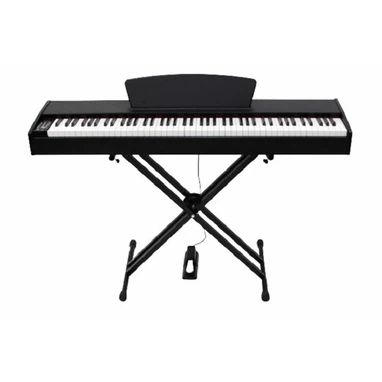

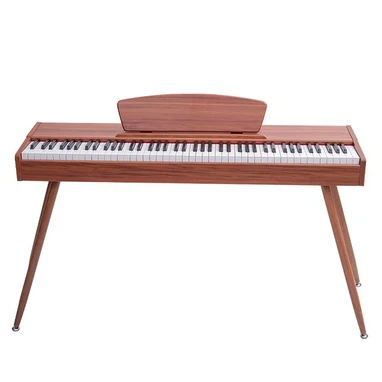


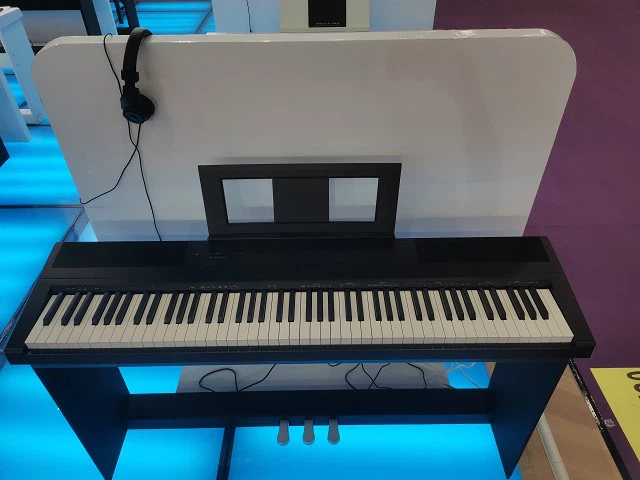

Features of Our Convenient Portable Digital Piano
Weighted or Hammer Action Keys
To simulate the feel of an acoustic piano and help develop finger strength and technique.
Connectivity
USB or MIDI connectivity for interfacing with computers or other devices for educational purposes.
Variety of Sounds
While the primary focus is piano sounds, having additional instrument sounds can add versatility to practice sessions.
Built-in Metronome
Essential for practicing timing and rhythm.
Compact Design
Easy to move and store, making it convenient for practice in different locations.
Headphone Jack
Allows for private practice without disturbing others.
Common Body Types of Digital Pianos
The two most common body types of digital pianos are portable (slab) and console. Less common are digital upright and grand pianos.
Console: A digital console piano is built to look somewhat like a traditional piano and comes with legs, pedals, and music stand attached. These instruments are designed to stay in one location. To safely transport these types, some disassembly is usually recommended, and it is always best to follow the manufacturer's instructions. If you don't feel comfortable taking your instrument apart (and correctly reassembling), you should call a professional piano mover.
Portable: Portable pianos, sometimes called slab pianos, are designed to be moved around frequently. These will come with separate, mobile bases, detachable music stands, and pedals. Needless to say, these digital pianos are the easiest to transport. Just make sure to check out the additional tips below before moving your portable piano the first time.
Digital Upright and Grand Pianos: These are the least common and most expensive types of a digital piano. Usually manufactured by major piano brands such as Kawaii, Yamaha, and Roland, they are in almost every aspect the same as full-sized upright or grand pianos. Some models cannot be disassembled. These instruments are as challenging to move as their traditional acoustic counterparts, so the average person shouldn't attempt to move these expensive and sometimes fragile instruments. Instead, use the services of a professional piano mover who will have more experience to transport them safely.
Benefits of Portable Digital Pianos
Most mid-range portable digital pianos pack tons of functions into a slim body. Customarily, they come in the size of 51"-53"(L) x 11"-13" (D) x 6"-7" (H), and weigh about 25 lbs to 30 lbs.
These digital pianos are very easy to carry and fit nicely into compact cars.
They are perfect for gatherings in friends' homes, playing within small ensembles, and gigging in professional performances.
In many situations, the onboard speakers are adequate for small gatherings. Additionally, many of them provide line-out ports to connect externally powered speakers for outdoors or larger venues.
In many cases, a portable digital piano does not come with a stand. Since it is so compact, you can just put it on any table or desk.
Many manufacturers provide an option for you to purchase a matching stand. Hence a portable digital piano can be easily converted into a home-use upright piano. It fits in contemporary décor perfectly.
All digital pianos feature at least one headphone jack, and many with two. You can practice quietly without disturbing others in the house.
Most of them provide an onboard recording system, some with multiple tracks. This function allows you to record your performance and also can aid your practice. For instance, you can record your left hand and then practice your right hand with the left-hand playback.
Many portable digital pianos allow you to connect to your computer or wireless devices. This enables you to learn from apps, record your pieces, and exchange songs from your devices.
When it comes to piano apps, there are two main categories.
First are the stand-alone apps that can be used regardless of which digital piano you have. These apps present a broad spectrum of teaching functions, including note reading, real-time feedback, ear training, music games, etc.
The second category is the apps from digital piano manufacturers. These apps are compatible with a specific brand or model. In many cases, these apps extend the functionalities of the digital piano itself. For example, you may use the app to remotely control the piano settings, change tones, or provide accompaniment.
Common Applications of Portable Digital Piano

A portable digital piano is a versatile instrument that can be used for various purposes. Whether you are a beginner, a professional, or somewhere in between, a portable digital piano can offer you many benefits. Here are some common applications of portable digital pianos:
Practicing at Home
A portable digital piano can be easily set up and stored at home, saving you space and money. You can also adjust the volume or use headphones to practice without disturbing others. Some models have built-in metronomes, recording functions, and learning modes to help you improve your skills.
Performing on Stage
A portable digital piano can be a great choice for performing live, as it is easy to transport and set up. You can also connect it to external speakers, amplifiers, or sound systems for better sound quality. Some models have various sounds, effects, and styles to enhance your performance and suit different genres of music.
Composing and Recording
A portable digital piano can be a useful tool for composing and recording your own music. You can connect it to a computer or a mobile device and use software or apps to edit, mix, and share your creations. Some models have MIDI compatibility, USB ports, and Bluetooth connectivity to facilitate this process.
Teaching and Learning
A portable digital piano can be a valuable asset for teachers and students of music. You can use it to demonstrate techniques, play along with songs, or accompany other instruments. Some models have split keyboard, dual voice, or duet mode features to allow two players to play simultaneously on the same instrument.
How to Clean the Keys of Digital Piano?
Cleaning the keys of a digital piano needs to be done with care. Using the wrong cleaning product can cause damage to the mechanisms of the keys, altering their functionality completely. You want to use as little moisture as possible. Here's a three-step process to follow:
1) Dampen one of the microfiber cloths with lukewarm water and a small amount of dishwashing liquid, then wring it out enough so that water does not drip on the keys. Use the cloth to gently wipe down several keys at a time in a "toward-the-player" motion (i.e., from the part of the keys farthest from you to the part closest to you).
2) Take the second microfiber cloth and dampen it with lukewarm water only, then wring it out enough so that water does not drip on the keys. Use it to wipe down the keys again in the same "toward-the-player" motion.
3) Using the third microfiber cloth (but keeping it completely dry), wipe down the keys one more time in that same "toward-the-player" motion until all the keys are dry.

How to Choose Digital Piano For Practice?

If you are looking for a digital piano that is easy to carry around and has all the essential features for playing and learning, you might want to consider some of the following factors:
Weight and Size
A light and compact digital piano can be more convenient to transport and store, especially if you have limited space or travel frequently. You should look for a digital piano that weighs less than 15 kg and has a slim design that fits in most car trunks or closets.
Keyboard Action and Touch Sensitivity
A good digital piano should have a realistic keyboard feel that mimics the response and resistance of an acoustic piano. This can help you develop your finger strength and technique, as well as express your musical nuances. You should look for a digital piano that has weighted or semi-weighted keys, with adjustable touch sensitivity to suit your preference and playing style.
Sound Quality and Variety
A digital piano should have a clear and rich sound that reproduces the tone and timbre of an acoustic piano. It should also have a decent speaker system that can fill a small room with sound, or a headphone jack that allows you to practice silently. Additionally, you might want a digital piano that offers a range of other sounds, such as electric pianos, organs, strings, and drums, to expand your musical repertoire and creativity.
Connectivity and Functionality
A digital piano should have some useful features that enhance your playing and learning experience, such as a metronome, a recorder, a tuner, and a transpose function. You might also want a digital piano that has USB or MIDI ports that allow you to connect it to your computer or mobile device, and access various apps and software that can help you learn, compose, or perform music.
Tips for Using a Digital Piano for Practice
Here are some additional tips for using a digital piano for practice:
Make Sure the Digital Piano Has the Features You Need
Not all digital pianos are created equal. Some digital pianos come with a variety of features that can be helpful for practice, such as built-in lessons, accompaniment tracks, and metronomes.
Set Up Your Digital Piano in a Quiet Place Where You Won't Be Interrupted
You want to be able to focus on your practice without distractions.
Set a Timer for 30 Minutes and Practice Every Day
Even if you can only practice for 30 minutes a day, it will add up over time.
Find a Piano Teacher Who Can Help You Track Your Progress and Give You Feedback
A piano teacher can help you identify any bad habits you may be developing and correct them.
Don't Give Up!
Learning piano takes time and effort, but it's definitely worth it in the end.

Specification of Our Portable Digital Piano For Practice
|
Color |
Brown |
|
Key |
88 keys hammer action keyboard |
|
Model Number |
Dream5704 series |
|
Digital audio source chip |
Imported from France |
|
Souce |
128 polyphonic numbers |
|
Basic functions |
Power switch, volume control, MIDI function, audio output, headset, USB Learning socket |
|
Product size |
126*35*13.5CM |
|
Product weight |
GW: 24.8KGS |
|
Packing size |
131.5X46X26.5CM |
Frequently Asked Questions About Portable Digital Piano For Practice
Q: What is piano?
Q: Is it OK to practice on a digital piano?
Q: Can you learn piano on a portable keyboard?
Q: Should a beginner get a keyboard or digital piano?
Q: Can I put digital piano on desk?
Q: Do I need 61 or 88 keys?
Q: How many keys do you need for a digital piano?
Q: Do lighted keys help learn piano?
Q: Do all digital pianos have weighted keys?
Q: What are the three pedals on a piano?
Q: Do I need a stand for digital piano?
Q: Do I need pedals for digital piano?
Q: Does dust damage the digital piano?
Q: Can you use alcohol wipes on the piano?
Q: Do I need a dust cover for my digital piano?
Hot Tags: portable digital piano for practice-factory, China portable digital piano for practice-factory manufacturers, suppliers, Portable Digital Piano, Portable Digital Piano Weighted Keys, Unique Portable Digital Piano, 88 Key Portable Digital Piano For Kids, Portable Digital Piano 88 Keys, Portable Digital Piano For Learner
Send Inquiry


