

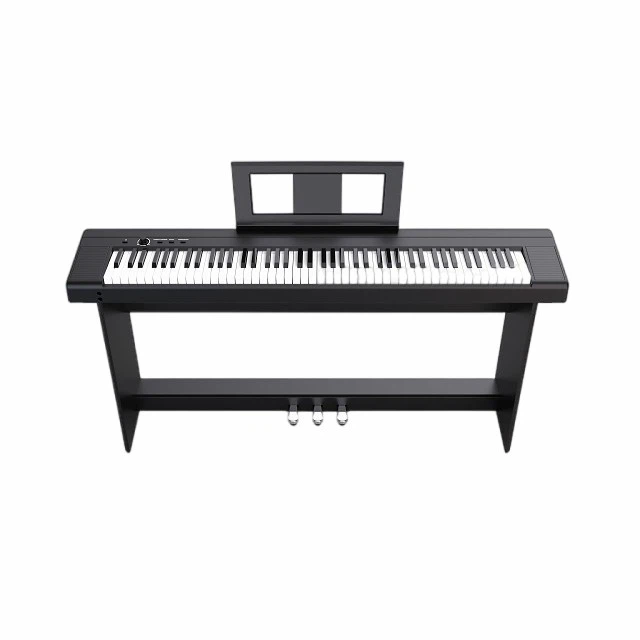
Convenient Portable Digital Piano-factory
Description
Technical Parameters
What Is Convenient Portable Digital Piano?
A Convenient Portable Digital Piano is a compact and easily transportable electronic keyboard designed for convenience and flexibility.
BEISITE: Wholesale Convenient Portable Digital Piano Manufacturer
Experienced Company
Jinjiang Beisite Electronic Technology Co., Ltd was established in 2012 and is an experienced company. Our annual production capacity is 80000 cartons. With an export license, we export products to Europe, America, Southeast Asia, and the Middle East. Our products gain wide praise at home and abroad.
Superior Quality
Quality is a priority at Beisite. All digital piano developed and manufactured by Beisite leaves the factory fully calibrated according to the most stringent industrial standards in force today. Our Certificates include FCC, EMC, Rosh, LVD, CE, PSE, etc.
Advanced Equipment
We not only have professional workers but also have the continuous updating of hardware equipment. Such as advanced facilities of an automatic Plug-in Machine, Automatic Welding Machine, High-Pressure Tester, High-Temperature Tester, and Vibration Tester.
After-Sale Service
We promise to provide customers with one year of after-sales support. Our sales team will try our best to give good after-sale service, handle customer complaints, and solve problems for customers.

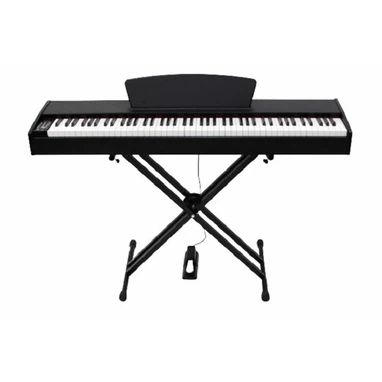

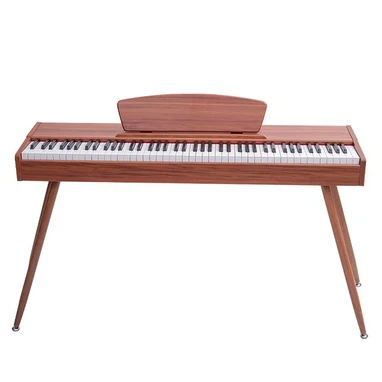


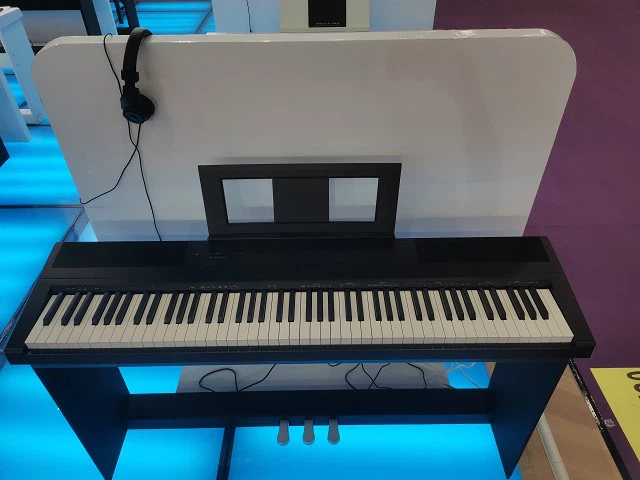

Features of Our Convenient Portable Digital Piano
Types of Portable Digital Piano
Keyboard
A keyboard is the simplest and cheapest type of portable digital piano. It usually has 61 or 76 keys, which are often not weighted or touch-sensitive. A keyboard is suitable for beginners or casual players who want to learn the basics of piano playing or practice simple songs. However, a keyboard does not offer the same sound quality, expressiveness and realism as a digital piano.
Synthesizer
A synthesizer is a type of portable digital piano that can produce a wide range of sounds and effects, such as strings, brass, drums, organs and more. A synthesizer usually has 61 or 76 keys, which may or may not be weighted or touch-sensitive. A synthesizer is ideal for musicians who want to experiment with different genres, styles and sounds, or create their own music. However, a synthesizer may not have the best piano sound or feel, and it may require additional equipment such as amplifiers, pedals and cables.
Stage Piano
A stage piano is a type of portable digital piano that is designed for professional performance. It usually has 88 keys, which are weighted and touch-sensitive to mimic the feel of an acoustic piano. A stage piano also has high-quality sound samples, effects and features that can enhance the musical expression and dynamics. A stage piano is perfect for advanced players who want to play on stage or in a studio. However, a stage piano is more expensive, heavier and bulkier than other types of portable digital pianos, and it may not have built-in speakers or batteries.
Benefits of Using Digital Piano
As with normal electric instruments, the volume of digital pianos is easily adjustable. On better models, you can even adjust the EQ of your instruments to get the sound you're after. With a digital piano, you can also plug in a headset to delve into your music without being heard or disturbing others. Digital pianos also include many other sounds than just your standard acoustic piano. With a single push of a button, you can get the sound of other instruments like the guitar, bass, flute, violin, and so on.
Playing an acoustic piano gives you all the elegance you can imagine, but there is a fatal disadvantage to it – portability. For normal people who hit the road with their instruments frequently, a digital piano is a necessity as you can't easily move an acoustic piano. Digital pianos are also often much cheaper than their acoustic counterparts. Acoustic pianos require frequent maintenance to keep them in perfect shape, which can be expensive.
As a beginner, being able to record your playing and share it with others can be rewarding. With a built-in recording system, you can easily make high quality recordings of your playing. Digital pianos also have output jacks, which allow you to record your sounds more directly. Recording an acoustic piano requires microphones and a controlled environment.
Most digital pianos have built-in practice tools like backing tracks and metronomes. Some even display chords on the monitoring screens. These functions can be very useful for beginners to practice their musical fundamentals.
Weighted Actions of Digital Piano

Let's take a look at the three weighted actions most commonly used in digital keyboards.
Semi-Weighted
As mentioned previously, most entry-level digital keyboards and synthesizers have unweighted keys. However, some intermediate models offer a semi-weighted action. These instruments incorporate spring-action keys with more resistance than those found in an unweighted keyboard, providing a playing experience which is more responsive to your touch.
Hammer Action
Digital instruments with a hammer action keyboard include a mechanism that replicates that of an acoustic piano. This is usually achieved by the attachment of a physical lever system and hammers to add more resistance to the keys you're playing.
Graded Weighting
Every single key on a grand piano keyboard is weighted differently. This is because the strings for each note are slightly thinner and shorter in the treble register, becoming thicker and longer towards the bass register. As a result, there is greater resistance when playing low notes than when playing high notes. In other words, a heavier touch is required in the left hand and a lighter touch in the right hand. To emulate this in a digital piano, the keys are often individually weighted, with the lower keys heavier than the higher ones - something that's called graded weighting.
Clean Portable Digital Piano Step by Step
1) To clean a digital piano keyboard, you will need: Warm water; a few drops of gentle dish washing soap; two soft, clean, white, cloths
2) Mix warm water with a few drops of gentle dish washing soap in a small bowl. Be sure to mix well.
3) It is important to use white cloths when cleaning a digital piano keyboard because the chemicals of a colored cloth can cause damage. Dampen one of the cloths slightly with the mixture. Wipe the damp cloth gently over each key, remembering to wipe the sides of each key.
4) Use the other cloth to remove any moisture left behind on the keyboard. Be sure to take time on this step to prevent any damage to the digital piano keyboard due to drops of water or moisture left behind.
5) A Q-tip can be used to clean the corners of the digital piano keyboard that the damp cloth cannot reach. Simply dip the Q-tip in the small bowl to get it damp. Carefully clean the corners without allowing drops of water to fall between the keys.

Key Features of the Digital Piano that You Should Care
Sound Quality
When an instrument is being evaluated, sound is always the priority. As far as a digital piano is concerned, the quality of sound depends heavily on its electronic components. Even if the digital piano has the greatest sound libraries, without an excellent output section, the sounds won't come out right. When evaluating a digital piano, pay special attention to the overall realism of its sound. Generally speaking, better digital pianos have more storage and memory, which allows them to play back larger, higher quality sound files, which in turn makes the instrument sound more realistic.
Don't Get Trapped by the Number of Tones
While it may look great to you to have almost any kind of instruments' sounds on your piano, you should also pay attention not to fall into the trap of quantity over quality. Having the chance to play all the instruments on your piano may seem intriguing at first, but when you get bored with all of those extra sounds, you'll find yourself playing the standard piano sounds the most, so the quality of these sounds is the most vital.
Polyphony
Polyphony refers to the number of notes a piano can play at the same time. Normal models provide 32 note polyphony and 64 notes polyphony. We recommend you pick up a piano with at least 32 notes of polyphony. The greater the polyphony, the better. You can go with 128 notes and even higher if you ever have the need.
Amplification and Outputs
If you're primarily playing piano at home, having an amplifier that sounds good is important. If you are looking to play shows, then make sure that your piano has the right outputs to plug into a PA system.
Backtracking and Tools
To help beginners, piano manufacturers often incorporate functions that help them practice straight out of the box. Most of the pianos available on the market provide the ability to play back certain rhythmic patterns at various speeds. Then you can play along with those patterns. If the drum sounds are too distracting, you can also just use a metronome function. Practicing along to a metronome is always recommended for beginners to develop a sense of rhythm. Many models also have visual displays that can show chord charts to help a student play.
Connect Your Digital Piano to Your Android Device

Your Instrument Has a USB to Host Port (USB-B)
1)You'll need a USB-A to USB-B cable (with USB 2.0) and an OTG adapter.
2)Connect the USB-B end to your instrument's To Host port.
3)Connect the USB end of the cable to the OTG USB adapter. Most newer tablets or phones might require an OTG USB-A to USB-C, while older devices usually have a micro-USB port, which requires a micro-USB OTG adapter.
4)Plug the micro-USB or USB-C end of the adapter into your Android device.
5)Open any song or lesson within the app to reach the flowkey player. The app will ask permission to access your keyboard or digital piano. Please allow this access.
6)If your instrument isn't detected automatically, tap the gear icon in the top right corner to reach the Settings menu, then open MIDI/USB to establish a connection manually.
Your Instrument Has MIDI Ports
1)You'll need a MIDI to USB cable and an OTG adapter.
2)Connect the MIDI In/MIDI Out end of the cable to your instrument.
3)Connect the USB end of the cable to the OTG USB adapter. Most newer tablets or phones might require an OTG USB-A to USB-C, while older devices usually have a micro-USB port, which requires a micro-USB OTG adapter.
4)Plug the micro-USB or USB-C end of the adapter into your Android device.
5)Open any song or lesson within the app to reach the flowkey player. The app will ask permission to access your keyboard or digital piano. Please allow this access.
6)If your instrument isn't detected automatically, click on the gear icon in the top right corner to reach the Settings menu, then open MIDI/USB to establish a connection manually.

Specification of Our Convenient Portable Digital Piano
|
Color |
Black |
|
Key |
88-key hammer action keyboard |
|
Model Number |
Dream5704 series |
|
Digital audio source chip |
Imported from France |
|
Souce |
128 polyphony numbers, 8 timbres, 128 rhythms and 30 demo songs |
|
Basic functions |
Electronic switch, volume control, audio output, dual headphone, USB socket |
|
Combination function |
Chord, dynamics, trill, sustain, reverb, metronome, transpose, recording |
|
Optional frame |
1. Wooden frame |
|
Product size |
145X32X12CM |
|
Product weight |
GW: 11KGS |
|
Packing size |
146X36X25CM |
Frequently Asked Questions About Convenient Portable Digital Piano
Q: What is piano?
Q: Are portable keyboards any good?
Q: What are weighted keys?
Q: Are digital pianos heavy?
Stage pianos, on the other hand, are very easy to move around and are no heavier than a solid keyboard.
Q: Does a digital piano have pedals like a regular piano?
From left to right, the function of the pedals is as follows; the una corda pedal changes the sound of the instrument, making notes appear softer and more mellow. The sostenuto pedal allows you to choose which notes to sustain while allowing others to remain staccato. Lastly, the sustain pedal will enable you to elongate all the notes or chords at the same time, and is the most commonly used pedal of the three. In stage pianos or instruments with only one pedal, you'll find it will perform the sustain function.
Q: Are weighted keys better?
Q: What is the difference between weighted and non weighted keys?
Q: Are weighted keys good for beginners?
Q: How does a portable piano work?
Q: How do I use my digital piano on my computer?
Q: Can you plug a piano keyboard into an iPhone?
Q: Do digital pianos need to be plugged in?
Q: Can you learn piano on a portable keyboard?
Q: Is a digital piano just a keyboard?
Q: What is the lifespan of a digital piano?
Q: Should you cover your digital piano?
Hot Tags: convenient portable digital piano-factory, China convenient portable digital piano-factory manufacturers, suppliers, Standard Portable Digital Piano, Lightweight Stage Piano, Big But Light Portable Digital Piano, Long Lasting Portable Digital Piano, Portable 88 Key Digital Piano, Portable Digital Piano 88 Keys
Send Inquiry


