

How Digital Piano Practice Rewires Your Brain For Calm And Focus: The Science-Backed Guide
Apr 14, 2026
Leave a message
I started playing digital piano during lockdown just to pass time. Six months later, I realized my anxiety attacks had decreased dramatically." "After twenty minutes of keyboard practice, my mind feels clearer than after meditation." "As someone with ADHD, piano practice is the only activity that consistently helps me focus."
These testimonials reflect a growing body of scientific research: regular practice on electronic keyboards and digital pianos may offer measurable benefits for mental health, cognitive function, and emotional regulation. As anxiety disorders affect over 40 million adults in the United States alone, and attention challenges impact millions globally, researchers are increasingly exploring music-making as an accessible, non-pharmaceutical intervention.
We consulted neuroscientists, clinical psychologists, and music therapy researchers across the United States and Europe to examine how digital piano practice influences brain plasticity, stress response, and concentration - and to provide a practical, evidence-based guide for leveraging keyboard practice as a tool for mental wellness.
🔍 Quick Answer for Searchers:
Yes, digital piano and electronic keyboard practice can help reduce anxiety and improve focus. Research shows that regular piano practice activates brain regions associated with emotional regulation, increases gray matter density in areas linked to attention, and lowers cortisol levels. For best results, aim for 20-30 minutes of mindful practice daily, focusing on process over perfection.
The Neuroscience: What Happens in Your Brain When You Play Piano
Brain Plasticity and Structural Changes
Neuroimaging studies reveal that learning and practicing keyboard instruments induces measurable changes in brain structure and function.
Key Findings:
Increased gray matter density in the prefrontal cortex (executive function), hippocampus (memory), and auditory cortex (sound processing)
Enhanced corpus callosum connectivity, improving communication between brain hemispheres
Strengthened motor-sensory integration through coordinated hand-eye-ear feedback loops
Expert Insight: "Playing digital piano isn't just a motor task - it's a full-brain workout," explains Dr. Amanda Foster, cognitive neuroscientist at University of Oxford. "The combination of reading notation, coordinating hands, processing sound, and regulating emotion engages networks that support both cognitive and emotional health."
The Stress Response: How Keyboard Practice Lowers Cortisol
Research published in the Journal of Music Therapy (2024) found that thirty minutes of digital piano practice reduced salivary cortisol levels by an average of 23% in adults with moderate anxiety.
Mechanisms at Work:
Rhythmic entrainment: Steady tempo playing can synchronize brainwaves, promoting alpha-state relaxation
Focused attention: Keyboard practice requires present-moment awareness, functioning as a form of mindfulness meditation
Achievement feedback: Small wins during practice trigger dopamine release, counteracting stress-related neurotransmitter depletion
Expert Insight: "The digital piano offers unique advantages for stress reduction," notes Dr. Rachel Goldman, clinical psychologist specializing in music interventions at Juilliard School. "Headphone capability enables private practice without performance anxiety. Volume control prevents overstimulation. These features make consistent practice more accessible for anxious individuals."
Digital Piano vs. Acoustic: Does Instrument Type Matter for Mental Health Benefits?
A common question among searchers: Do the mental health benefits of piano practice require an acoustic instrument, or does a digital piano work just as well?
Research Summary: Current evidence suggests that the act of playing - not the instrument type - drives most psychological benefits. However, certain digital piano features may enhance accessibility for mental wellness applications:
|
Benefit |
Acoustic Piano |
Digital Piano |
|---|---|---|
|
Tactile feedback |
Authentic hammer action |
Weighted keys on mid/high-end models |
|
Privacy |
Limited (sound carries) |
Headphone capability enables silent practice |
|
Accessibility |
Requires dedicated space |
Portable options; apartment-friendly |
|
Cost barrier |
Higher initial investment |
Entry models from $300-500 |
|
Maintenance stress |
Tuning, climate control |
Minimal upkeep |
Expert Insight: "For mental health applications, consistency matters more than instrument prestige," says Dr. Foster. "If a digital piano enables daily practice that an acoustic piano would prevent due to space, cost, or noise concerns, then the digital instrument delivers greater therapeutic value."
💡Tip for Readers Searching "digital piano for anxiety":
Look for digital pianos with weighted keys, headphone jacks, and simple interfaces. Features like built-in metronomes and recording functions support mindful practice without requiring additional apps or devices.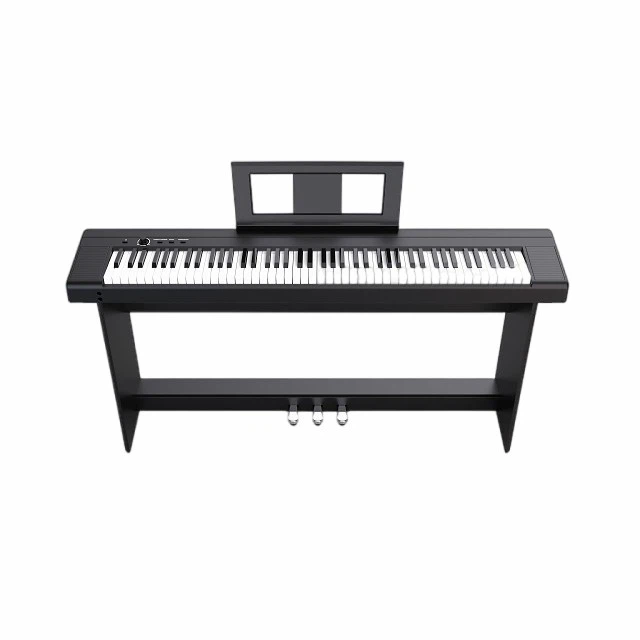
The Focus Factor: How Keyboard Practice Trains Attention
Executive Function and Cognitive Control
Studies using EEG and fMRI technology show that keyboard practice strengthens neural networks underlying attention regulation.
Research Highlights:
A 2025 study in Frontiers in Psychology found that adults who practiced electronic keyboard for 8 weeks showed 15% improvement on sustained attention tasks compared to control groups
Children with ADHD who engaged in structured piano lessons demonstrated enhanced ability to filter distractions and maintain task focus
Older adults who learned digital piano showed slower age-related decline in working memory and processing speed
Why Keyboard Practice Specifically Helps Focus:
Dual-task coordination: Reading music while coordinating hands challenges cognitive flexibility
Error monitoring: Immediate auditory feedback trains self-correction without harsh self-judgment
Progressive challenge: Gradually increasing difficulty builds tolerance for cognitive effort
Expert Insight: "Keyboard practice is cognitive training disguised as art," explains Marcus Webb, music cognition researcher in London. "The skills you develop - sustained attention, error tolerance, sequential processing - transfer to work, study, and daily life."
Practical Guide: Using Digital Piano Practice for Anxiety Relief and Focus Enhancement
Step 1: Establish a Mindful Practice Routine
Duration: Start with 10-15 minutes daily; gradually increase to 20-30 minutes
Structure:
Minutes 1-3: Breathing exercise + gentle warm-up scales (focus on sensation, not speed)
Minutes 4-12: Repertoire practice at comfortable tempo (prioritize flow over perfection)
Minutes 13-18: Improvisation or creative exploration (no "right" or "wrong")
Minutes 19-20: Reflection + gentle cool-down (notice how you feel)
Expert Tip: "Consistency beats duration," advises Dr. Goldman. "Ten minutes daily creates stronger neural pathways than seventy minutes once weekly."
Step 2: Choose Anxiety-Reducing Repertoire and Techniques
For Immediate Calm:
Simple, repetitive patterns (ostinatos) in major keys
Slow tempos (60-80 BPM) to encourage relaxed breathing
Pieces with predictable harmonic progressions (reduces cognitive load)
For Focus Building:
Scales and arpeggios with metronome (trains sustained attention)
Short etudes requiring precise coordination (builds cognitive control)
Memorization practice (strengthens working memory)
Recommended Beginner-Friendly Pieces:
Erik Satie – Gymnopédie No. 1 (slow, meditative)
Yiruma – River Flows in You (repetitive, emotionally accessible)
Traditional folk melodies (familiar, low-pressure)
🔍 Keyword Integration for Searchers:
Searching for "piano pieces for anxiety relief"? Start with slow, repetitive compositions in major keys. Digital piano features like tempo control and loop functions let you practice challenging sections without frustration.
Step 3: Leverage Digital Piano Features for Mental Wellness
Modern electronic keyboards and digital pianos offer tools that support therapeutic practice:
Headphone Practice: Enables private, judgment-free exploration - especially valuable for social anxiety
Built-in Metronome: Supports rhythmic grounding, which can reduce rumination and anxious thoughts
Recording Function: Allows playback for self-compassion practice ("I'm progressing" vs. "I'm failing")
Sound Variety: Switching tones (piano, strings, pads) can refresh attention and prevent practice fatigue
App Integration: Guided practice apps (Simply Piano, Flowkey) provide structure for those who struggle with self-direction
Expert Insight: "Technology should serve intention," notes Jennifer Lee, music therapy consultant in Los Angeles. "Use digital piano features to reduce barriers to practice - not to create pressure for perfection."
Real Stories: Mental Health Transformations Through Keyboard Practice
Sarah T., 34, Marketing Manager, Chicago
"I started digital piano practice during a period of severe work anxiety. Twenty minutes each evening became my non-negotiable reset button. Six months later, my therapist noticed reduced rumination and improved emotional regulation. The keyboard didn't fix everything - but it gave me a tool to access calm on demand."
Michael R., 28, Graduate Student, Toronto
"As someone with ADHD, focusing on anything for more than ten minutes was a struggle. Piano practice changed that. The immediate feedback loop (press key → hear sound) kept me engaged. Now I use keyboard practice as a 'focus warm-up' before studying. It's like meditation with melody."
Elena M., 41, Nurse, Madrid
"After traumatic experiences at work, I struggled with hypervigilance and insomnia. My music therapist suggested gentle digital piano practice before bed. The combination of rhythmic repetition and creative expression helped quiet my nervous system. I sleep better now - and I've rediscovered joy in making music."
David K., 52, Software Developer, Seattle
"Burnout left me mentally exhausted and emotionally flat. Learning electronic keyboard wasn't about becoming a musician - it was about reconnecting with curiosity. The progressive challenge of piano practice rebuilt my confidence in learning new things. That mindset shift affected everything."
Frequently Asked Questions (FAQ) - Optimized for Search
❓ Can playing digital piano really help with anxiety?
Yes. Research shows that regular keyboard practice can lower cortisol levels, activate brain regions associated with emotional regulation, and provide a structured outlet for stress relief. Benefits are strongest when practice is consistent, mindful, and process-focused rather than perfection-focused.
❓ How long does it take to see mental health benefits from piano practice?
Many practitioners report subjective improvements in mood and focus within 2-4 weeks of consistent daily practice (15-30 minutes). Neuroimaging studies show measurable brain changes after 8-12 weeks of regular engagement.
❓ Do I need prior musical experience to benefit?
No. Mental health benefits derive from the process of playing - focused attention, rhythmic engagement, creative expression - not from technical proficiency. Beginners often experience greater stress relief because expectations are lower.
❓ Is a digital piano as effective as an acoustic piano for mental wellness?
Yes, for most applications. The psychological benefits stem from active playing, not instrument type. Digital pianos offer advantages like headphone practice, portability, and lower cost that may increase accessibility and consistency - key factors for therapeutic outcomes.
❓ What if I get frustrated while practicing?
Frustration is normal. Strategies to manage it:
Lower the tempo or simplify the passage
Switch to improvisation or familiar pieces
Take a brief breathing break
Remind yourself: progress, not perfection
💡 Pro Tip for SEO:
Searching for "how to start piano for anxiety"? Begin with 10 minutes daily, choose simple repetitive pieces, use headphones for privacy, and focus on how playing feels rather than how it sounds.
Expert Recommendations: Building a Sustainable Practice for Mental Wellness
For Anxiety Management:
Practice at consistent times to establish routine
Use slow tempos and major keys for calming effect
Incorporate breathing exercises before and after playing
Keep a brief journal noting mood changes related to practice
For Focus Enhancement:
Use a metronome to train sustained attention
Practice memorization to strengthen working memory
Break complex pieces into small, achievable segments
Track progress visually (checklist, app) to maintain motivation
For General Cognitive Health:
Vary repertoire to challenge different neural pathways
Combine keyboard practice with other brain-healthy habits (sleep, exercise, social connection)
Consider group playing or online communities for social engagement benefits
Expert Insight: "Think of digital piano practice as cognitive-emotional cross-training," summarizes Dr. Foster. "You're not just learning music - you're strengthening the mental muscles that support resilience, focus, and well-being."
Red Flags: When to Seek Additional Support
While keyboard practice offers meaningful benefits for many, it is not a substitute for professional mental health care. Consult a qualified provider if you experience:
Persistent anxiety or depression that interferes with daily functioning
Thoughts of self-harm or hopelessness
Inability to engage in previously enjoyable activities
Symptoms that worsen despite consistent self-care practices
Expert Caution: "Music practice can complement therapy - not replace it," emphasizes Dr. Goldman. "If you're struggling, reach out to a mental health professional. Many therapists now integrate music-based interventions into treatment plans."
The Bigger Picture: Music, Technology, and Mental Health in the Digital Age
As digital pianos and electronic keyboards become more accessible, researchers are exploring how technology-mediated music-making might address growing mental health needs globally.
Emerging Directions:
AI-guided practice that adapts to emotional state (early research phase)
VR keyboard experiences for immersive relaxation environments
Telehealth integration where therapists assign keyboard practice as homework
Community platforms connecting players for supportive, low-pressure sharing
Expert Insight: "The convergence of music, technology, and mental health is just beginning," notes Marcus Webb. "What matters most isn't the sophistication of the tool - it's whether it helps people engage with music in ways that support their well-being."
Final Thought: Your Keyboard, Your Sanctuary
In a world of constant demands and digital distraction, the simple act of sitting at a digital piano and making music can become a profound act of self-care. The research is encouraging: regular keyboard practice may help quiet anxiety, sharpen focus, and nurture the brain's capacity for growth and resilience.
But the science, while valuable, is not the whole story. As one practitioner shared:
"I don't play piano to optimize my brain. I play because for twenty minutes each day, the noise stops - and I remember who I am beneath the stress. If my brain benefits too, that's a gift. But the gift I keep coming back for is the music itself."
Whether you're searching for "digital piano for anxiety," "keyboard practice for focus," or simply a way to reconnect with joy, the invitation is open. Your instrument awaits. Your mind is ready. Begin where you are.
📧 Reader Engagement
Have you experienced mental health benefits from keyboard practice? What questions do you have about using music for wellness? Share your story at jjbet01@beisite-tech.com Selected insights will be featured in upcoming issues.