

One-Person Band: How To Create Professional Street Performances Using Auto-Accompaniment And Loop Pedals
May 07, 2026
Leave a message
Meta Description: Learn how to build a one-person band setup with digital piano auto-accompaniment and loop pedals. Equipment guide, song selection strategies, and confidence tips for introverted performers. Featuring Beiste portable digital piano.
Primary Keywords: digital piano, piano, electronic keyboard, auto-accompaniment, loop pedal, street performance, busking
Secondary Keywords: one person band keyboard, portable keyboard for busking, loop pedal tutorial, Beiste digital piano, introvert street performer
Reading Time: 10 Minutes

NEW YORK - "I'm an introvert who loves music-but the thought of street performing terrified me." "How can one person create a full-band sound with just a digital piano?" "What equipment do I actually need to start busking without breaking the bank?"
These questions reflect a growing community: shy musicians, solo artists, and creative souls discovering that modern electronic keyboard technology makes professional-sounding street performances accessible to anyone. With auto-accompaniment features and loop pedals, a single player can create rich, layered soundscapes that captivate audiences-and build confidence along the way.
We consulted street performers, live sound experts, and introvert coaches across the United States and Europe to create a practical guide for building your one-person band setup. Plus, we highlight the Beiste portable digital piano-a game-changer for performers who value portability, power, and professional sound.
🔍 Quick Answer for Searchers:
Yes, you can create professional street performances as a solo digital piano player using auto-accompaniment and loop pedals. Essential gear includes: a portable keyboard with built-in rhythms (like the Beiste S-190), a loop pedal for layering, a compact amplifier, and a reliable power source. Start with simple songs, practice your transitions, and remember: audiences connect with authenticity, not perfection.
Why Auto-Accompaniment + Loop Pedals Change Everything for Solo Performers
The Technology Behind the Magic
Modern electronic keyboards with auto-accompaniment analyze your left-hand chords and generate full band arrangements in real time-drums, bass, guitars, strings, and more. Loop pedals let you record and layer phrases on the fly, building complex arrangements from simple ideas.
Combined Power:
Auto-accompaniment provides instant rhythmic and harmonic foundation
Loop pedals enable melodic layering and dynamic builds
Together, they let one player sound like an ensemble
Expert Insight: "Auto-accompaniment and looping aren't cheats-they're creative tools," explains Marcus Webb, street performance coach in London. "They remove technical barriers so you can focus on what matters: connecting with your audience through music."
Perfect for Introverts and Anxious Performers
Street performing can feel intimidating-especially for self-described "i-people" or those with social anxiety. Technology offers a supportive scaffold:
How Tech Reduces Performance Anxiety:
Predictable structure: Auto-accompaniment provides rhythmic stability when nerves strike
Layered confidence: Loop pedals let you build complexity gradually, reducing pressure to "get it right" on the first take
Focus on music: Technical tools handle arrangement, freeing mental space for emotional expression
Expert Insight: "For introverted performers, technology isn't a crutch-it's a bridge," notes Dr. Amanda Foster, performance psychologist at University of Oxford. "Auto-accompaniment and looping create a safety net that lets shy musicians take creative risks they might otherwise avoid."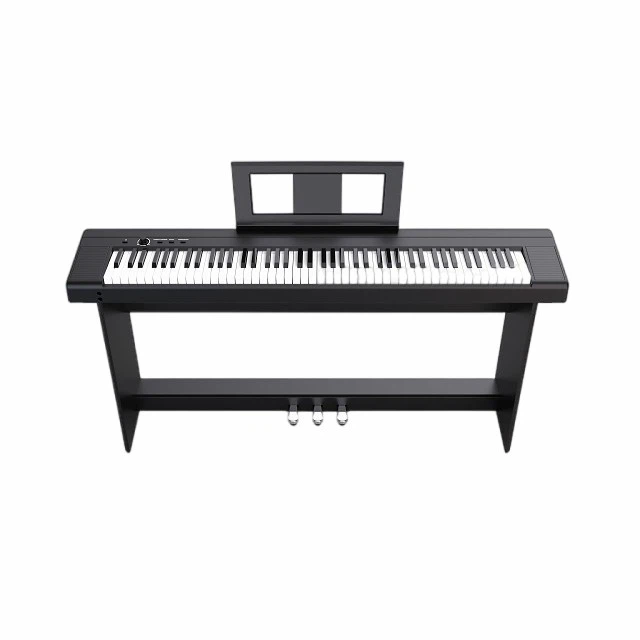
Essential Gear: Building Your One-Person Band Setup
The Core Equipment Checklist
|
Item |
Purpose |
Budget Option |
Pro Option |
|---|---|---|---|
|
Portable Digital Piano |
Main instrument with auto-accompaniment |
Beiste S-190 ($200) |
Yamaha PSR-EW425 ($600) |
|
Loop Pedal |
Record and layer phrases in real time |
TC Electronic Ditto ($100) |
Boss RC-500 ($450) |
|
Compact Amplifier |
Project sound to street audiences |
Roland Mobile Cube ($200) |
Bose S1 Pro ($600) |
|
Power Solution |
Reliable energy for outdoor performances |
Portable power bank ($50) |
Portable power station ($200) |
|
Weather Protection |
Shield gear from sun, rain, dust |
Simple keyboard cover ($30) |
Hard case with padding ($150) |
Featured Pick: Beiste S-190 Portable Digital Piano
For street performers seeking the ideal balance of portability, power, and professional features, the Beiste S-190 stands out as an exceptional choice.
Why Street Performers Love Beiste S-190:
✅ Built-in Auto-Accompaniment: 200+ rhythm styles spanning pop, jazz, Latin, and world music-perfect for diverse street audiences
✅ Battery-Powered Operation: Up to 8 hours of playtime on a single charge-no outlet hunting required
✅ Ultra-Portable Design: Weighs just 11 lbs (5 kg) with integrated carrying handle-fits in overhead bins and car trunks
✅ Professional Sound Engine: 600+ high-quality tones with adjustable reverb and chorus for rich, venue-filling sound
✅ Intuitive Interface: Large LCD display and clearly labeled buttons-easy to navigate even under performance pressure
✅ MIDI/USB Connectivity: Connect to laptops or tablets for expanded sound options or recording
Real Performer Testimonial:
"I switched to the Beiste S-190 after my old keyboard died mid-gig. The battery life alone changed my street performing game-I can play a 3-hour set without worrying about power. And the auto-accompaniment styles sound so professional, people ask if I'm backing with a band." - Elena M., 28, Street Musician, Barcelona
Expert Insight: "The Beiste S-190 hits the sweet spot for mobile performers," says Jennifer Lee, live sound consultant. "It's light enough to carry all day, powerful enough to fill a plaza, and intuitive enough that you can focus on performance, not menu-diving."
💡 SEO Tip for Searchers:
Searching for "best portable digital piano for street performance"? Prioritize battery life, weight under 15 lbs, built-in auto-accompaniment, and durable construction. The Beiste S-190 checks all these boxes at a competitive price point.
Loop Pedal Basics: Your Layering Partner
How Loop Pedals Work:
Press record: Play a chord progression or rhythmic phrase
Press play: The loop repeats seamlessly
Layer additional parts: Melodies, harmonies, percussion
Build dynamically: Add or mute layers for arrangement control
Beginner-Friendly Loop Pedals:
|
Pedal |
Key Features |
Best For |
|---|---|---|
|
TC Electronic Ditto |
Simple one-button operation, compact size |
Absolute beginners, minimalists |
|
Boss RC-1 |
Visual loop indicator, stereo output |
Performers wanting visual feedback |
|
Beiste Loop Station (compatible with Beiste keyboards) |
Dedicated integration, preset memory |
Beiste users seeking seamless workflow |
Pro Tip: Start with simple 4-bar loops. Master one layer before adding complexity. Your audience will appreciate clarity over clutter.
Amplification and Power: Don't Get Cut Off Mid-Performance
Amplifier Selection Criteria:
Portability: Under 15 lbs for easy transport
Battery option: Critical for locations without outlets
Sound quality: Clear mids for piano presence, adequate bass for fullness
Durability: Weather-resistant casing for outdoor use
Power Solutions:
Portable power banks: Lightweight, USB-powered options for small setups
Portable power stations: Higher capacity for multi-device setups (keyboard + amp + pedal)
Solar chargers: Eco-friendly option for extended outdoor sessions
Expert Insight: "Power failure is the most common street performance disaster," warns Marcus Webb. "Always carry backup power-and test your entire setup before heading out."
Song Selection Strategy: Choosing Repertoire That Works for Solo Performance
The Golden Rules of Street Setlists
Rule 1: Recognizability Over Complexity
Audiences connect with familiar melodies
Simple arrangements with strong hooks work better than virtuosic displays
Example: "Let It Be" (The Beatles) > Complex jazz standard
Rule 2: Emotional Arc Matters
Start with accessible, upbeat pieces to draw attention
Build to emotional peaks with layered arrangements
End with memorable, singable melodies for lasting impact
Rule 3: Adapt to Your Environment
Busy plazas: Upbeat, rhythmic pieces cut through ambient noise
Quiet parks: Intimate, melodic selections create connection
Tourist areas: International hits or local favorites resonate broadly
Genre-Specific Strategies
Pop/Rock Covers:
Use auto-accompaniment rock or pop styles
Loop vocal-like melodies with piano or synth tones
Example setup: Verse with simple piano + drums, chorus with added strings via loop
Jazz/Standards:
Leverage jazz or bossa nova auto-accompaniment styles
Loop walking bass lines, then layer improvisational melodies
Tip: Keep harmonies simple; let rhythmic feel carry the performance
Original Compositions:
Build from simple piano motifs using loop pedal
Add atmospheric pads or percussion via auto-accompaniment
Advantage: Unique sound helps you stand out in crowded performance spaces
Expert Insight: "Your setlist is your conversation with the audience," explains David Chen, street performance veteran. "Start with 'hello' (recognizable tune), build to 'let me show you something special' (layered arrangement), end with 'thank you' (memorable closer)."
Performance Techniques: Building Confidence as a Solo Street Performer
For Introverts and Anxious Performers
Pre-Performance Rituals:
Breathing exercise: 4-count inhale, 4-count hold, 6-count exhale (repeat 3x)
Gear check routine: Systematic verification reduces pre-show anxiety
Visualization: Mentally rehearse successful performance moments
During Performance Strategies:
Focus on the music, not the crowd: Let auto-accompaniment provide rhythmic anchor when nerves arise
Use loop pedal as "practice time": Recording a loop gives you 4-8 bars to collect yourself
Start small: Play to one person before expanding your focus
Expert Insight: "Anxiety isn't the enemy-avoidance is," notes Dr. Foster. "Each small performance builds evidence that you can handle the experience. Technology like auto-accompaniment provides scaffolding while you build confidence."
Engaging Audiences Without Words
Non-Verbal Connection Techniques:
Eye contact: Brief, genuine connection with individual audience members
Body language: Natural movement that matches musical energy
Dynamic variation: Use volume and texture changes to create emotional journey
Handling Interruptions Gracefully:
Keep playing: Maintain musical flow even if someone approaches
Smile and nod: Acknowledge without breaking performance momentum
Have a "pause plan": Simple transition to end a piece if needed
Expert Insight: "Street performance is improvisation in the broadest sense," says Marcus Webb. "You're not just playing music-you're responding to environment, audience, and moment. That flexibility is a skill that grows with practice."
Real Stories: Introverts Who Found Their Voice on the Street
Alex K., 24, Software Developer & Weekend Busker, Portland
"I'm deeply introverted-small talk drains me. But playing piano on the street feels different. The music speaks for me. I started with the Beiste S-190 because it was light enough to carry on my bike. The auto-accompaniment lets me sound bigger than I am. Now I have regulars who come to hear me play. It's connection without the pressure."
Maria S., 31, Teacher & Evening Performer, Madrid
"I teach all day-by evening, I'm socially exhausted. Street performing with my electronic keyboard became my reset button. The loop pedal lets me build arrangements slowly, which matches my thoughtful personality. People often ask if I'm in a band. I smile and say: 'Just me and my keyboard.'"
James L., 27, Student & Park Performer, Toronto
"Social anxiety made traditional performances terrifying. But street performing with auto-accompaniment felt safer-the technology had my back. I practiced transitions until they were automatic. Now I can focus on emotion, not mechanics. My digital piano isn't just an instrument-it's my confidence partner."
Priya R., 29, Artist & Market Performer, Mumbai
"As someone who struggles with crowds, I was surprised to love street performing. The key was starting small: 30-minute sets, familiar songs, simple arrangements. The Beiste keyboard's battery life meant I never worried about power. Now I see performing as practice in courage-not perfection."
Common Pitfalls and How to Avoid Them
❌ Over-Layering with the Loop Pedal
Mistake: Adding too many loops creates muddy, indistinct sound.
Solution: Follow the "three-layer maximum" rule: foundation (chords/rhythm), melody, texture. Less is often more powerful.
❌ Ignoring Volume Balance
Mistake: Auto-accompaniment drowning out your piano melody.
Solution: Set accompaniment volume 20-30% lower than your main piano sound. Test at performance volume before heading out.
❌ Underestimating Setup Time
Mistake: Arriving with no time to sound-check or organize gear.
Solution: Arrive 30 minutes early. Create a setup checklist: power, connections, sound levels, loop pedal reset.
❌ Playing Only for Yourself
Mistake: Focusing so intently on technique that you miss audience connection.
Solution: Schedule "audience check-ins": every 2-3 minutes, briefly scan faces and adjust energy accordingly.
Expert Insight: "Street performance is a dialogue, not a monologue," summarizes Jennifer Lee. "Your digital piano provides the voice. Your awareness provides the connection."
💡 Pro Tip for SEO:
Searching for "street performance tips for beginners"? Start with short sets (30 minutes), simple repertoire, and reliable gear. The Beiste S-216's portability and auto-accompaniment make it ideal for first-time buskers.
Frequently Asked Questions (FAQ) - Optimized for Search
❓ Do I need permission to street perform with a digital piano?
Check local regulations. Many cities require permits for amplified performances or regular busking. Start with unamplified piano in public parks to test your comfort level, then research permit requirements for your target locations.
❓ How loud should my amplifier be for street performance?
Aim for clarity, not volume. Your sound should be audible 15-20 feet away without overwhelming conversation. Test at your intended performance spot: if people nearby can hear you comfortably without shouting, you're in the right range.
❓ What if my loop pedal or keyboard malfunctions mid-performance?
Have a backup plan. Practice transitioning smoothly from layered arrangements to simple piano solo. Carry basic troubleshooting tools: extra cables, power adapter, quick-reference guide for your gear.
❓ How do I handle negative reactions or indifference from passersby?
Remember: not every performance is for everyone. Focus on the people who stop, smile, or engage. A single connected moment outweighs dozens of indifferent passersby. Your authenticity attracts your audience.
❓ Is the Beiste BP-200 suitable for professional street performing?
Yes, for most applications. The Beiste BP-200 offers professional sound quality, reliable auto-accompaniment, and exceptional portability at a mid-range price point. For high-volume outdoor venues, consider pairing it with a dedicated portable amplifier for maximum projection.
🔍 Keyword Integration for Searchers:
Searching for "Beiste digital piano review street performance"? The B-80 battery life, auto-accompaniment library, and lightweight design make it a standout choice for mobile performers. Read verified user reviews for real-world performance insights.
Building Your First Street Performance: 30-Day Action Plan
Week 1: Gear Preparation and Home Practice
Test your complete setup: digital piano, loop pedal, amplifier, power solution
Practice 3-5 simple songs with auto-accompaniment and looping
Record yourself to identify transition points and volume balance
Week 2: Low-Stakes Public Testing
Perform in your living room with windows open
Play in a quiet park during off-hours (1-2 people present)
Practice your pre-performance ritual and setup routine
Week 3: Short Public Sets
20-30 minute performance in a low-traffic location
Focus on connection, not perfection: make eye contact, smile, breathe
Debrief afterward: what worked, what to adjust
Week 4: Refinement and Expansion
Extend set to 45 minutes with varied repertoire
Experiment with audience engagement techniques
Plan your next performance location and logistics
Expert Insight: "Progress compounds," notes Marcus Webb. "Each small performance builds skills, confidence, and audience. Start where you are. Your one-person band journey begins with a single note."
Final Thought: Your Music, Your Terms, Your Connection
Street performing as a solo digital piano player isn't about replicating a full band-it's about creating authentic musical moments that resonate with whoever happens to listen. With auto-accompaniment and loop pedals, technology becomes your creative partner, not your crutch.
For introverts, anxious performers, or anyone who loves music but fears the spotlight, this approach offers a gentle pathway: start small, lean on reliable tools, and let your musical voice grow at its own pace.
As Alex, our introvert performer, reflects: "I used to think performing meant becoming someone else. Now I know: it means sharing who I already am. My Beiste keyboard doesn't change my personality-it amplifies my passion. That's enough."
Your instrument is ready. Your story matters. Your audience is waiting.
📧 Reader Engagement
Are you considering street performing with your digital piano or electronic keyboard? What questions do you have about gear, repertoire, or building confidence? Share your thoughts atjjbet01@beisite-tech.com .Selected stories and expert responses will be featured in upcoming issues.