

Unlock Your Creative Voice: The Complete Guide To Improvisation On Digital Pianos And Electronic Keyboards
Jul 06, 2026
Leave a message
NEW ORLEANS - "I can play sheet music, but when asked to improvise, my mind goes blank-how do I start?" "What scales and chords should I learn first for improvisation on my digital piano?" "Can I really develop creative spontaneity without years of jazz training?"
These questions reflect a common barrier among keyboard players: improvisation feels mysterious, intimidating, or reserved for "naturally gifted" musicians. Yet improvisation isn't magic-it's a learnable skill built on foundational techniques, mindful practice, and creative courage.
We consulted jazz educators, improvisation specialists, and creative performance coaches across the United States, Europe, and Asia to create a practical, encouraging guide for developing improvisation skills on electronic keyboards. Plus, we highlight the Beisite S-190-a digital piano designed with creative exploration and spontaneous expression in mind.
🔍 Quick Answer for Searchers:
Yes, anyone can learn to improvise on a digital piano or electronic keyboard with structured practice and creative courage. Start with simple scale patterns over basic chord progressions, focus on listening and responding rather than perfection, and gradually expand your harmonic and rhythmic vocabulary. The Beisite S-190 supports improvisation with extensive tone library for creative exploration, intuitive layering for spontaneous texture building, MIDI connectivity for looping and recording ideas, and responsive key action that rewards expressive playing-all at an accessible price point.
Why Improvisation Matters: Beyond Notes to Creative Expression
The Transformative Power of Spontaneous Music-Making
What Improvisation Really Is:
Improvisation isn't about playing random notes-it's about making musical decisions in real time. It combines technical knowledge, ear training, emotional intuition, and creative risk-taking to generate spontaneous musical expression.
Benefits Beyond Performance:
Research in music cognition shows that regular improvisation practice supports:
Enhanced auditory processing through active listening and real-time response
Strengthened harmonic understanding through applied theory exploration
Increased performance confidence through embracing uncertainty and mistakes
Deeper creative connection by accessing intuitive musical impulses
Expert Insight: "Improvisation isn't a separate skill from playing-it's playing with freedom," explains Dr. Marcus Webb, jazz educator and improvisation specialist at Berklee College of Music. "When you improvise, you're not just executing notes; you're having a conversation with your instrument, your ears, and your imagination."
Common Myths That Block Creative Progress
Myth: "You need to know advanced theory to improvise." Reality: Many compelling improvisers start with simple scales and basic chord knowledge. Theory supports creativity but doesn't precede it.
Myth: "Improvisation is only for jazz musicians." Reality: Improvisation enriches playing across genres-pop, rock, classical, film scoring, and personal expression.
Myth: "You either have it or you don't." Reality: Improvisation is a learnable skill built through structured practice, not an innate gift reserved for the few.
Expert Insight: "The biggest barrier to improvisation isn't skill-it's permission," notes Jennifer Lee, creative performance coach. "Give yourself permission to explore, to make 'mistakes,' to listen more than you plan. Creativity flourishes in safety, not perfection."
💡 SEO Tip for Searchers:
Searching for "how to start improvising on piano"? Begin with one scale over one chord progression. Focus on listening and responding rather than complex theory. Simple, consistent practice builds creative confidence faster than overwhelming complexity.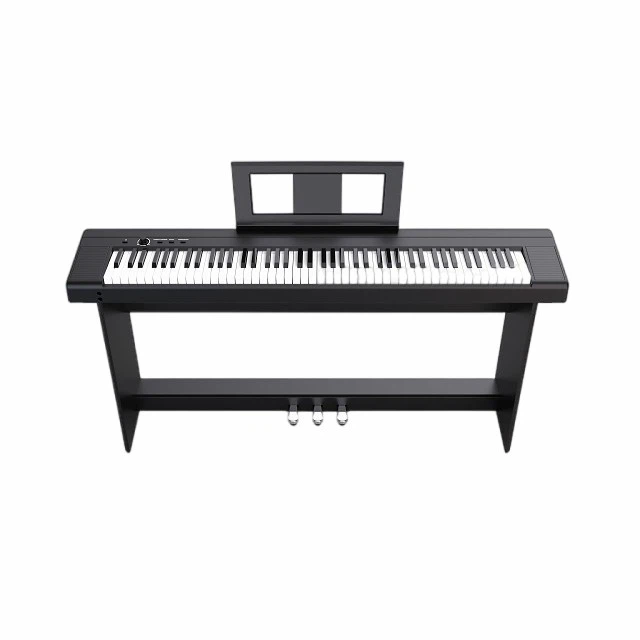
Foundation First: Building Blocks for Confident Improvisation
Essential Knowledge: Scales, Chords, and Ear Training
Start with the Pentatonic Scale:
The five-note pentatonic scale is improvisation's most forgiving foundation. In C major, it includes C-D-E-G-A-no "wrong" notes over most chord progressions. Practice ascending and descending patterns, then experiment with rhythmic variation and melodic contour.
Master Basic Chord Progressions:
Start with the I-IV-V progression (C-F-G in C major), the backbone of countless songs across genres. Practice playing chords with your left hand while improvising simple melodies with your right. Focus on connection between harmony and melody, not complexity.
Develop Your Ear Through Active Listening:
Improvisation is conversation-you need to hear to respond. Spend time listening to improvisers you admire across genres. Notice how they build phrases, use space, and respond to harmonic changes. Then try to echo short phrases on your electronic keyboard.
Expert Insight: "Ear training isn't separate from improvisation-it's improvisation's foundation," advises Dr. Webb. "When you can hear what you want to play, your fingers will follow. Start by singing simple melodies, then find them on your digital piano."
Practical Exercises for Early Improvisation Confidence
Exercise One: One Scale, One Chord Choose one pentatonic scale and one chord. Improvise for two minutes using only those notes. Focus on rhythm, phrasing, and dynamics rather than note choice. Record yourself and listen back without judgment.
Exercise Two: Call and Response Play a short 2-4 note phrase with your right hand, then "respond" with a complementary phrase. Alternate hands or imagine a musical conversation with yourself. This builds listening skills and phrase development.
Exercise Three: Rhythmic Variation Take a simple melodic fragment and play it with different rhythms-straight eighths, swung eighths, triplets, syncopation. Notice how rhythm transforms the same notes into distinct expressions.
Pro Tip: Set a timer for 5-10 minute improvisation sessions. Time limits reduce pressure to be "perfect" and encourage spontaneous decision-making.
🔍 Keyword Integration for Searchers:
Searching for "beginner piano improvisation exercises"? Start with pentatonic scales over basic progressions, focus on rhythm and phrasing over complexity, and practice in short, low-pressure sessions. Consistency builds creative confidence.
Level Up: Expanding Your Improvisational Vocabulary
Harmonic Exploration: Beyond Basic Progressions
Adding Color with Extended Chords:
Once comfortable with basic triads, explore seventh chords (Cmaj7, Dm7, G7) and extended harmonies (C9, Fmaj9). These add richness and direction to your improvisational palette. Practice voicing chords with your left hand while improvising melodies that highlight chord tones.
Modal Improvisation:
Modes offer distinct emotional colors over the same root. Dorian mode (D-E-F-G-A-B-C) sounds jazzy and introspective; Mixolydian (G-A-B-C-D-E-F) sounds bright and bluesy. Practice improvising over a single chord using different modes to explore tonal variety.
Chord Substitution Basics:
Learn simple substitutions like replacing a V chord with a ii-V progression, or adding passing chords between main harmonies. These create harmonic movement that inspires melodic creativity.
Expert Insight: "Harmonic knowledge should liberate, not constrain," notes Jennifer Lee. "Learn chords to expand your options, then forget the theory and listen. Your ears know more than your brain about what sounds good."
Rhythmic and Textural Development
Rhythmic Displacement:
Take a familiar phrase and start it on different beats-begin on the "and" of 2, or delay by an eighth note. This creates fresh perspectives on familiar material and develops rhythmic flexibility.
Textural Layering:
Use your electronic keyboard's layering features to combine sounds spontaneously. Layer a piano voice with strings or pads while improvising to create instant atmospheric depth. Experiment with split mode to play bass lines with your left hand while improvising melodies above.
Dynamic Storytelling:
Shape improvisations like narratives-begin softly, build intensity, reach a peak, then resolve. Use volume, articulation, and space to create emotional arcs that engage listeners.
Pro Tip: Record improvisation sessions and listen back critically. Notice which rhythmic choices, harmonic approaches, or textural combinations feel most compelling. Use these insights to guide future exploration.
💡 Pro Tip for SEO:
Searching for "how to add variety to piano improvisation"? Experiment with rhythmic displacement, modal exploration, and textural layering. Your digital piano's features-like layering and split mode-can instantly expand your creative palette.
Featured Instrument: Beisite S-190 - Designed for Creative Exploration
Why the Beisite S-190 Supports Improvisational Growth
For players seeking to develop improvisation skills on a digital piano, the Beisite S-190 delivers features that inspire spontaneous creativity and support technical development.
Improvisation-Friendly Features of the Beisite S-190:
The Beisite S-190 features 600+ high-quality tones spanning acoustic pianos, electric pianos, strings, pads, synths, and world instruments-providing extensive raw material for spontaneous textural exploration. Its intuitive layering and split controls enable quick sound combinations without menu-diving, supporting real-time creative decisions during improvisation.
Responsive weighted keys with adjustable touch sensitivity reward expressive playing, encouraging dynamic nuance and articulation variety essential for compelling improvisation. The built-in recording function enables immediate capture of spontaneous ideas for later development or reflection.
USB-MIDI and Bluetooth connectivity enable seamless integration with looping pedals, DAW software, and improvisation apps that expand creative possibilities. The large LCD display clearly shows active layers, split points, and settings, reducing cognitive load during spontaneous playing.
Real Improviser Testimonial:
"As someone developing my improvisation skills, the Beisite S-190 has been transformative. The extensive tone library inspires new ideas instantly, the responsive keys reward expressive risk-taking, and the recording function lets me capture spontaneous moments I'd otherwise forget. It feels like a creative partner, not just an instrument." - Alex K., 29, Improviser and Educator, Portland
Expert Assessment:
"The Beisite S-190 reflects thoughtful design for creative players," notes Dr. Webb, improvisation specialist. "Extensive tones inspire exploration, responsive action rewards expression, and intuitive controls keep focus on music rather than menus. For players developing improvisational voice, it's exceptional value."
Who Should Consider the Beisite S-190 for Improvisation:
Players beginning their improvisation journey will appreciate the extensive tone library and intuitive controls that inspire spontaneous exploration. Intermediate improvisers seeking to expand harmonic and textural vocabulary will value the layering capabilities and responsive key action. Educators teaching improvisation will find the recording function and MIDI connectivity valuable for student development and demonstration.
Consider Alternatives If:
You require specialized jazz workstation features like advanced sequencing may want to explore dedicated production keyboards. You prioritize ultra-portability over full 88-key range may prefer compact travel models for spontaneous playing anywhere. You need professional studio connectivity for complex production workflows may prefer instruments with expanded audio/MIDI options.
🔍 Keyword Integration for Searchers:
Searching for "Beisite S-190 for improvisation review"? The S-190's extensive tone library, intuitive layering controls, responsive key action, and recording function make it a compelling choice for players developing improvisational creativity at an accessible price point.
Practice Framework: From Structured Exercises to Spontaneous Flow
The 4-Week Improvisation Development Plan
Week One: Foundation Building Focus on pentatonic scales over I-IV-V progressions. Practice 10-minute improvisation sessions daily, focusing on rhythmic variation and phrase development. Record one session to listen back without judgment.
Week Two: Harmonic Expansion Introduce seventh chords and modal exploration. Practice improvising over the same progression using different modes to explore tonal variety. Experiment with chord substitutions to create harmonic movement.
Week Three: Textural and Rhythmic Development Incorporate layering and split mode features of your electronic keyboard to expand textural palette. Practice rhythmic displacement and dynamic storytelling to develop expressive range.
Week Four: Integration and Performance Combine techniques learned throughout the month into cohesive improvisations. Practice performing short improvisations for family, friends, or via video recording. Focus on flow and expression rather than technical perfection.
Expert Insight: "Progress in improvisation isn't linear-it's spiral," explains Jennifer Lee. "You'll revisit concepts at deeper levels as your ears and hands develop. Trust the process, celebrate small wins, and keep playing."
Creating a Supportive Practice Environment
Embrace "Mistakes" as Discoveries:
Reframe wrong notes as opportunities for creative redirection. Jazz legend Miles Davis famously said, "It's not the note you play that's the wrong note-it's the note you play afterwards that makes it right."
Cultivate Listening Over Planning:
Improvisation flourishes when you listen more than you plan. Practice improvising with eyes closed to deepen auditory focus. Record sessions and listen back to identify moments where listening led to compelling choices.
Build Creative Courage Through Small Risks:
Start improvising in low-pressure contexts-private practice, recording for yourself, playing for supportive friends. Gradually expand to more public contexts as confidence grows.
Pro Tip: Keep an improvisation journal noting what felt good, what surprised you, and what you'd like to explore next time. Reflection deepens learning and celebrates creative growth.
💡 Pro Tip for SEO:
Searching for "how to overcome fear of improvising"? Start in private, low-pressure contexts. Reframe "mistakes" as discoveries. Focus on listening and responding rather than perfection. Creative courage grows through small, consistent risks.
Real Stories: Players Who Found Their Creative Voice Through Improvisation
Alex K., 29, Improviser and Educator, Portland
"I could play sheet music beautifully but froze when asked to improvise. Starting with pentatonic scales over simple progressions on my Beisite S-190 built my confidence. The extensive tone library inspired new ideas, and the recording function let me capture spontaneous moments. One year later, improvisation feels like conversation, not calculation."
Maria S., 34, Hobbyist and Performer, Madrid
"I always thought improvisation was for 'real musicians.' Then I tried the 4-week framework with my Beisite S-190. The responsive keys rewarded expressive risk-taking, and the intuitive controls kept me focused on music, not menus. Now I improvise short pieces for friends-and I actually enjoy the uncertainty."
James L., 26, Music Student, Toronto
"Preparing for jazz exams, I needed to develop improvisation skills quickly. The Beisite S-190's MIDI connectivity let me practice with backing tracks, while the recording function helped me track progress. My improvisation has transformed from mechanical to musical-and my exams reflect that growth."
Elena T., 41, Returning Player, Chicago
"I played piano as a child but stopped for decades. Returning through improvisation on my Beisite S-190 felt liberating-no pressure to be 'perfect,' just freedom to explore. The creative joy I rediscovered has reignited my love for playing."
Frequently Asked Questions (FAQ) - Optimized for Search
❓ Do I need to know jazz to improvise on piano?
No. Improvisation enriches playing across genres-pop, rock, classical, film scoring, and personal expression. Start with simple scales and progressions in styles you enjoy. Jazz techniques can expand your vocabulary later, but they aren't required to begin.
❓ How long before I feel confident improvising?
Progress varies, but many players notice increased comfort within 4-6 weeks of consistent, structured practice. Focus on small wins-playing one phrase spontaneously, responding to a chord change, or embracing a "mistake" creatively. Confidence grows through experience, not perfection.
❓ What if I run out of ideas while improvising?
This is normal and part of the process. Return to simple scales or rhythmic patterns. Pause and listen. Repeat a phrase with variation. Remember: silence is musical too. Improvisation is conversation-sometimes you listen more than you speak.
❓ Can I improvise on any digital piano or electronic keyboard?
Yes, but features matter. Instruments with responsive key action, extensive tone libraries, and intuitive controls support creative exploration more effectively. The Beisite S-190 offers these improvisation-friendly features alongside professional performance capabilities.
❓ Is the Beisite S-190 suitable for developing improvisation skills?
Yes, exceptionally. The Beisite S-190 offers 600+ tones for creative exploration, intuitive layering and split controls for spontaneous texture building, responsive weighted keys that reward expressive playing, and recording/MIDI connectivity for capturing and developing ideas-all at an accessible price point for creative growth.
💡 Pro Tip for SEO:
Searching for "best keyboard for improvisation practice"? Prioritize responsive key action, extensive tone options, intuitive controls, and recording capabilities. The Beisite S-190 delivers these creative essentials alongside professional performance features.
The Bigger Picture: Improvisation as Lifelong Creative Practice
Improvisation isn't a destination-it's a way of engaging with music that deepens with time. Every session, every "mistake," every moment of spontaneous connection builds your creative voice.
Expert Insight: "Improvisation teaches us to trust ourselves," reflects Dr. Webb. "In a world of scripts and schedules, it's radical to create in real time, to listen deeply, to respond authentically. That practice extends far beyond the keyboard."
Final Thought: Your Voice, Your Instrument, Your Moment
You don't need perfect technique, advanced theory, or special permission to begin improvising. You need curiosity, courage, and the willingness to listen.
Whether you're exploring pentatonic scales over simple progressions or weaving complex textures with layered sounds, every spontaneous moment matters. Your digital piano or electronic keyboard is an invitation-to explore, to express, to create.
As one improviser shared on Reddit's r/piano:
"I used to think improvisation required genius. Then I started small-one scale, one chord, one minute at a time. My Beisite S-190's responsive keys and extensive tones made exploration joyful. Now improvisation feels like breathing-natural, expressive, alive. The music was in me all along; I just needed permission to let it out."
Your creative journey awaits. Start simple. Listen deeply. Play freely.
📧 Reader Engagement
What improvisation techniques have unlocked your creative voice on your digital piano or electronic keyboard? What questions do you have about developing spontaneous expression? Share your insights at jjbet01@beisite-tech.com. Selected stories and expert responses will be featured in upcoming issues.