

Clear and Agile, the Soul of Woodwinds – A Comprehensive Analysis of the Flute
Mar 05, 2026
Leave a message
The flute is an aerophone woodwind instrument that produces sound through airflow vibration, controls pitch by means of keys, and amplifies tone via resonance in its cylindrical tube. The origins of the flute can be traced back to ancient times. Its early form was the primitive transverse flute, created by humans for hunting, sacrificial rituals, entertainment and other purposes. The core feature of this stage was the basic sound-producing principle of airflow vibration and tube resonance. After the 15th century, the rise of the European Renaissance promoted the all-round development of art and technology. The transverse flute, the predecessor of the modern flute, underwent its first major innovation and gradually evolved from a folk instrument into a professional artistic instrument. From the mid-18th century to the late 19th century, the flute's key system achieved breakthrough innovation, its design became fully standardized, and its artistic expressiveness was greatly enhanced, formally establishing its core position in the woodwind instrument family. Since the 20th century, the flute has achieved comprehensive diversification in technological innovation, artistic styles and application scenarios. It retains the traditional heritage of classical music while gaining new vitality in modern music.
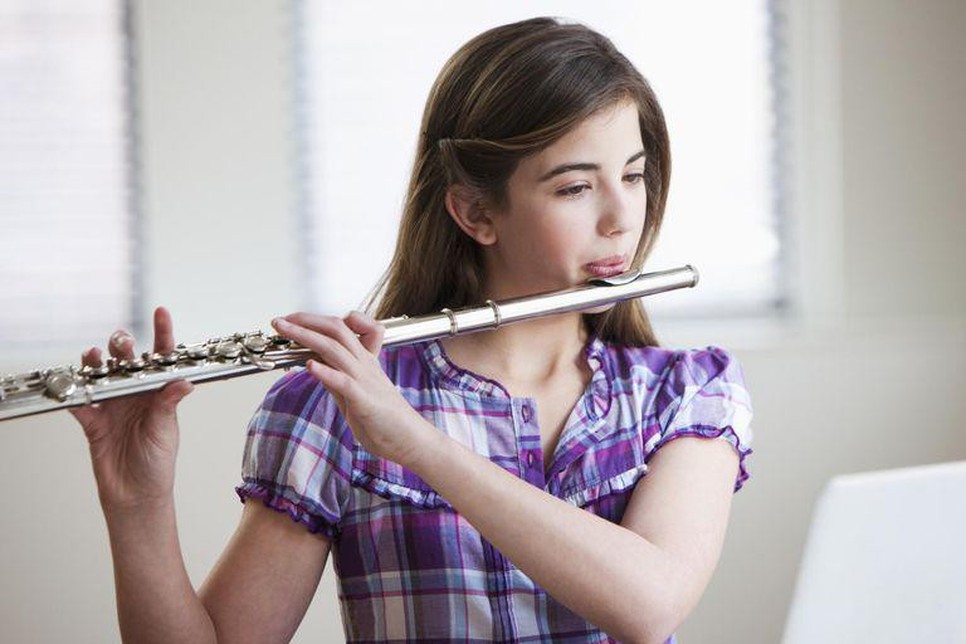
The flute's distinctive tone and expressiveness come from its precise structural design, which mainly consists of four parts: the tube system, the key system, the embouchure hole and the support system. All components work together to complete the whole process from airflow input to sound output, and its structural design embodies profound acoustic wisdom. The tube is the core component of the flute, serving as both the airflow channel and the resonance chamber. Its material, length and shape directly determine the timbre characteristics and pitch range. The key system is the critical component for pitch control, changing the effective length of the tube by opening and closing tone holes to enable full chromatic performance. The embouchure hole is the key component for sound production of the flute; its shape, size and angle directly affect the way airflow enters and the vibration effect, making it the core of the flute's personalized timbre. The support system of the flute is designed mainly to improve playing comfort and portability, including key rests, finger rests and instrument cases.
The sound production process of the flute is a complete chain: airflow input – airflow splitting – air column vibration – tube resonance – sound radiation. It mainly relies on the player's lip control and airflow adjustment, and with the unique resonance of the cylindrical tube, forms its bright, clear, agile and elegant timbre characteristics. The flute has remained vibrant for thousands of years thanks to its unique advantages in timbre, range, playing techniques and adaptability. It balances professionalism and expressiveness, and adapts to diverse musical scenes, making it the most agile instrument in the woodwind family. Timbre is the most essential artistic feature of the flute, characterized by brightness, clarity, agility, elegance and rich layers, combining the softness of woodwind instruments and the clarity of metal instruments, which is the core mark that distinguishes it from other woodwind instruments.

The flute is one of the most flexible instruments in the woodwind family. It is suitable for both delicate lyrical melodies and highly difficult fast passages and complex techniques, demonstrating extremely strong artistic expressiveness. These include legato, staccato, tenuto and spiccato. Legato playing is smooth and connected, ideal for lyrical melodies; staccato playing is concise and powerful, suitable for rhythmic passages; tenuto and spiccato are achieved through breath accents, full of elasticity, and often used in marches and light music. The timbre and playing characteristics of the flute give it strong adaptability, allowing it to integrate into different types and styles of musical scenes, making it an all-round woodwind instrument for cross-border integration. The flute is one of the core instruments in symphonies, concertos, operas and chamber music. In modern music such as jazz, pop, rock and film scores, the flute is an indispensable agile element. In folk music and world music, the flute integrates with instruments of different cultures, showing diverse artistic charm.
The flute is not only an instrument but also a carrier of human culture and history, carrying rich cultural value and playing an important role in music education, artistic innovation and cross-cultural communication. It is a perfect combination of technology and art, as well as a vivid reflection of tradition and innovation. It carries the historical memories of different eras and shows new vitality in the present. In the future, the flute will continue to innovate in inheritance and develop in integration, constantly expanding its artistic boundaries and injecting new vitality into the prosperity of global musical culture.
