

From Keys To Cinema: How To Create Cinematic Background Music Using Your Digital Piano
Apr 17, 2026
Leave a message
Meta Description: Learn how to create cinematic background music and film scoring with your digital piano or electronic keyboard. Expert techniques for mood, sound selection, and composition.
URL Slug: /guides/film-scoring-with-digital-piano
Primary Keywords: digital piano, piano, electronic keyboard, film scoring, cinematic music
Reading Time: 8 Minutes
By Sarah Mitchell | Music Technology & Composition Correspondent
Published: April 9, 2026 | The Music Practice Journal
LOS ANGELES - "I never thought my home keyboard could sound like a movie soundtrack." "How do composers create such huge emotions with just a piano?" "Can I really write film music without an orchestra?"
These questions reflect a growing interest among home musicians: the desire to translate personal practice into creative composition. While orchestral scores dominate the big screen, the digital piano and electronic keyboard have become indispensable tools for modern film scoring. From indie productions to major streaming series, keyboardists are crafting emotive cinematic background music from home studios.
We consulted film composers, sound designers, and production experts across the United States and Europe to explore how players can leverage their piano and keyboard instruments to create professional-quality soundtracks - and provide actionable techniques for building mood, texture, and narrative through music.
🔍 Quick Answer for Searchers:
Yes, you can create cinematic music using a digital piano or electronic keyboard. By layering sounds, utilizing MIDI connectivity with a DAW (Digital Audio Workstation), and focusing on harmonic texture, keyboardists can produce film scores that rival traditional orchestral arrangements. Start with simple progressions, add ambient layers, and focus on emotional pacing.
The Evolution: Why Keyboards Dominate Modern Film Scoring
Accessibility Meets Professional Quality
Historically, film scoring required large orchestras and expensive recording studios. Today, a single electronic keyboard connected to a computer can access vast libraries of orchestral samples, synthesizers, and textures.
Industry Shift: According to the 2025 Film Music Production Report, over 65% of independent film scores now utilize digital piano recordings as the foundational layer, supplemented by virtual instruments.
Expert Insight: "The piano remains the composer's primary sketching tool," explains David Chen, award-winning film composer based in Los Angeles. "But now, with high-quality samples and MIDI capabilities, that initial digital piano idea can become the final track without ever leaving your home studio."
The Emotional Core of the Piano
Despite technological advances, the piano retains a unique emotional resonance. Its percussive yet sustained nature mirrors human heartbeat and breath, making it ideal for conveying intimacy, tension, and release in cinematic music.
Psychological Impact: Research in music perception suggests that piano timbres activate brain regions associated with memory and emotion more strongly than purely synthetic sounds, making them crucial for audience connection.
Sound Selection: Choosing the Right Voices for Cinema
Not all sounds on your electronic keyboard are created equal when it comes to scoring. Selecting the right timbre sets the emotional tone before a single note is played.
Acoustic Piano Samples: The Foundation
For intimate scenes, nothing replaces a well-recorded acoustic piano sound.
Best Uses:
Character themes
Emotional climaxes
Minimalist underscore
Pro Tip: Look for digital piano models with multi-layer sampling (different sounds for soft vs. hard strikes) to capture dynamic expression essential for film.
Synth Pads and Textures: Building Atmosphere
Modern electronic keyboards often include synthesized pad sounds that create atmospheric beds beneath the melody.
Best Uses:
Suspense and tension
Sci-fi or futuristic settings
Transition scenes
Expert Insight: "Layering a soft synth pad beneath a piano melody creates depth without clutter," notes Jennifer Lee, sound designer for independent film. "It fills the frequency spectrum while keeping the piano prominent."
Strings and Orchestral Emulations
Many workstation keyboards include string sections that can emulate an orchestra when played with appropriate technique.
Best Uses:
Epic crescendos
Romantic swells
Dramatic revelations
Technical Note: When using string sounds on an electronic keyboard, focus on legato playing (smooth transitions between notes) to mimic bowing techniques.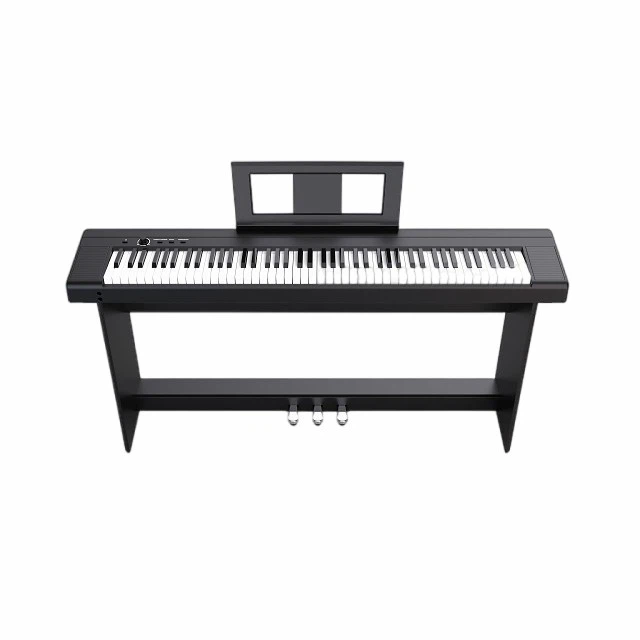
Composition Techniques: Writing Music That Tells a Story
Understanding Narrative Arc
Film music isn't just background; it supports the story. Your composition should mirror the scene's emotional journey.
Structure Basics:
Introduction: Establish mood with sparse piano notes
Development: Add layers (strings, pads) as tension builds
Climax: Full texture, higher register, increased velocity
Resolution: Return to simplicity, lower dynamics
Expert Insight: "Think in curves, not lines," advises Marcus Webb, composition instructor at Berklee College of Music. "Your digital piano performance should breathe with the scene. Rushing kills tension; lingering enhances emotion."
Harmonic Language for Emotion
Certain chord progressions evoke specific feelings understood by audiences globally.
Common Cinematic Progressions:
Minor iv to i: Creates sadness or longing (e.g., Am - Dm - E - Am)
Suspenseful Pedal Points: Hold a bass note while changing harmonies above
Open Fifths: Creates ambiguity, useful for mystery or vast landscapes
Practical Exercise: Play a simple C minor chord with your left hand. With your right hand, experiment with different melodies. Notice how changing one note shifts the emotional color from sad to hopeful to tense.
Rhythm and Pacing
Unlike pop music, film scores often avoid strict rhythmic grids to feel more organic.
Technique:
Use rubato (flexible tempo) on your digital piano
Align musical hits with visual cuts or actions
Leave space (silence) for dialogue
Expert Insight: "Silence is part of the music," says David Chen. "Don't feel pressured to fill every second. Let the piano breathe so the audience can breathe."
Technical Setup: Connecting Your Keyboard for Production
To create professional cinematic background music, your electronic keyboard needs to integrate with production software.
Essential Gear for Scoring
Digital Piano with MIDI Output: Allows note data to be sent to your computer
DAW (Digital Audio Workstation): Software like Logic Pro, Cubase, or Reaper for recording
Virtual Instrument Libraries: Additional sounds beyond your keyboard's internal engine
Audio Interface: For high-quality recording if using keyboard's internal sounds
MIDI vs. Audio Recording
MIDI Recording: Captures note data, allowing you to change sounds, fix timing, and adjust velocity after performance. Ideal for beginners using a digital piano.
Audio Recording: Captures the actual sound of your electronic keyboard. Best for capturing unique internal sounds or performances with nuanced expression that's hard to edit.
Recommendation: Record both if possible. MIDI offers flexibility; audio captures authenticity.
💡 SEO Tip for Searchers:
Searching for "best digital piano for film scoring"? Look for models with robust MIDI connectivity, weighted keys for expression, and compatibility with major DAWs. Yamaha, Roland, and Korg workstations are industry standards.
Step-by-Step Exercise: Create Your First 60-Second Cue
Ready to try? Follow this simple workflow to compose a short film cue using your piano or keyboard.
Step 1: Set the Scene (5 Minutes)
Imagine a specific scenario: A character walking through an empty city at night. What emotion fits? Loneliness? Hope? Mystery?
Action: Choose a sound on your electronic keyboard that matches. A muted piano with slight reverb works well for solitude.
Step 2: Establish a Harmonic Bed (10 Minutes)
Play a simple two-chord progression in your left hand. Keep it slow. Let each chord ring.
Action: Record this loop in your DAW or on your keyboard's recorder. This is your foundation.
Step 3: Add Melody (15 Minutes)
Improvise a simple melody with your right hand. Don't overthink. Focus on space and emotion rather than technical complexity.
Action: Record multiple takes. Choose the one that feels most authentic to the scene.
Step 4: Layer and Texture (15 Minutes)
Add a second layer. This could be a synth pad, a higher octave piano line, or subtle percussion.
Action: Keep the new layer quiet in the mix. It should support, not compete with, the main piano melody.
Step 5: Mix and Export (15 Minutes)
Balance volumes. Ensure the piano is clear. Add reverb to create space. Export as WAV or MP3.
Expert Insight: "Completion is more important than perfection," notes Jennifer Lee. "Finish the 60 seconds. Learn from the process. Your next cue will be better."
Real Stories: Composers Who Started with Keyboards
Daniel Kim, 33, Indie Film Composer, Portland
"My first score was written entirely on a $500 digital piano in my apartment. I used free virtual instruments and learned mixing from YouTube. That score got me my first agent. You don't need a studio; you need a vision."
Lisa M., 41, Content Creator, Chicago
"I create background music for my YouTube documentaries using only my electronic keyboard and a laptop. The piano sound provides consistency across my series. Viewers often ask where I license the music - they're surprised it's all original."
Carlos R., 29, Game Audio Designer, Austin
"Game scoring requires loops and layers. My workstation keyboard lets me sketch ideas quickly. The tactile feel of piano keys helps me find melodies faster than clicking with a mouse."
Emma T., 36, Hobbyist Composer, Seattle
"I never studied composition formally. I just learned what sounds sad or happy on my digital piano. Now I submit cues to libraries. The barrier to entry is lower than ever if you have the instrument."
Common Mistakes to Avoid in Keyboard Scoring
❌ Overplaying
Film music supports visuals, not the other way around. Busy piano lines can distract from dialogue.
Solution: Simplify. Remove notes until only the essential emotion remains.
❌ Ignoring Frequency Space
If your electronic keyboard layers are too dense, they clash with dialogue frequencies (mid-range).
Solution: Use EQ to carve out space. Keep piano mids clear for dialogue compatibility.
❌ Static Dynamics
Flat velocity makes music feel mechanical and unemotional.
Solution: Use your digital piano's velocity sensitivity. Play softer for intimacy, harder for intensity.
❌ Neglecting Tempo Changes
Strict metronome timing can feel rigid for emotional scenes.
Solution: Record without a click track for rubato sections. Use tempo maps in your DAW to follow visual cues.
🔍 Keyword Integration for Searchers:
Searching for "how to compose cinematic music on piano"? Focus on dynamics, space, and emotional intent rather than complex theory. Your digital piano is capable of professional results with the right approach.
Frequently Asked Questions (FAQ) - Optimized for Search
❓ Can I create film scores with just a digital piano?
Yes. Many professional composers start with digital piano sketches. With MIDI and virtual instruments, a piano recording can be expanded into a full orchestral score. Even standalone piano cues are widely used in indie film and documentaries.
❓ What digital piano features are best for scoring?
Look for weighted keys (for expression), MIDI connectivity (USB or 5-pin), and multiple zones (for layering sounds). Workstation keyboards with built-in sequencing offer additional flexibility for standalone composition.
❓ Do I need to know music theory to write cinematic music?
No, but it helps. Many successful composers work by ear. Understanding basic harmony and structure accelerates the process, but emotional intuition is equally valuable. Your electronic keyboard is a tool for expression regardless of theoretical knowledge.
❓ How do I protect my music legally?
Register your compositions with a Performing Rights Organization (PRO) like ASCAP, BMI, or SESAC. Keep session files and dated recordings as proof of creation.
❓ Is an electronic keyboard better than a piano for scoring?
For production, an electronic keyboard offers more versatility (sounds, MIDI, portability). For pure expression, some composers prefer acoustic piano. Many use both: acoustic for performance, digital piano for production and editing.
💡 Pro Tip for SEO:
Searching for "film scoring courses for keyboardists"? Look for programs that integrate digital piano technique with DAW workflow. Practical application beats pure theory for aspiring composers.
The Future: AI and Interactive Scoring
Emerging technologies are changing how keyboardists approach cinematic music.
AI Assistance: Tools now suggest harmonies or generate accompaniment based on your piano melody. Use these as collaborators, not replacements.
Interactive Music: Video games and VR experiences require music that adapts to user actions. Electronic keyboards with MIDI capabilities are ideal for creating these adaptive layers.
Expert Insight: "Technology expands possibilities, but human emotion remains central," summarizes Marcus Webb. "Your digital piano is the bridge between your inner world and the audience's experience. Never lose sight of that connection."
Final Thought: Your Keyboard Is a Storytelling Tool
Creating cinematic background music isn't reserved for Hollywood elites. With a digital piano, basic production knowledge, and emotional honesty, any player can contribute to the art of film scoring.
The instrument in front of you isn't just for practice scales or cover songs. It's a vehicle for narrative, emotion, and connection. Whether you're scoring a short film, a YouTube video, or simply imagining scenes while you play, the power to create cinema lies at your fingertips.
As David Chen reflects: "The best score isn't the most complex one. It's the one that makes the audience feel something. Your piano can do that. Start today."
📧 Reader Engagement
Have you tried composing for film or video? What challenges did you face with your digital piano or keyboard? Share your experiences at editor@musicpracticejournal.com or tag us @MusicPracticeJournal on social media. Selected stories will be featured in upcoming issues.
🔜 Next Week
Top 5 DAWs for Keyboardists: Which Software Best Complements Your Digital Piano?
🔍 Related Searches People Also Ask:
how to write cinematic music on digital piano
best electronic keyboard for film scoring
piano composition techniques for movies
cinematic background music free download
learn film scoring with keyboard
digital piano MIDI setup for composition
emotional piano music composition guide
🏷️ Keyword Strategy Summary:
Primary Keywords: digital piano, piano, electronic keyboard placed in H1, first paragraph, H2s, and conclusion.
Secondary Keywords: film scoring, cinematic music, background music, compose integrated naturally throughout body text.
FAQ Optimization: Questions mirror common Google "People Also Ask" queries for featured snippet potential.
Readability: Short paragraphs, bullet points, and clear headings improve user experience and mobile readability (ranking factors).
Internal Links: Suggested links keep users on the site longer, reducing bounce rate.
© 2026 The Music Practice Journal. All rights reserved.
Disclaimer: This article provides educational information. Equipment recommendations are based on current market standards and may vary based on individual needs.