
Genre Mastery: How To Adapt Your Electronic Keyboard For Any Musical Style
Apr 06, 2026
Leave a message
I can play piano, but I don't know how to make my keyboard sound like a jazz trio." "I want to produce electronic music, but I'm not sure which synth sounds to use." "How do I play Latin rhythms authentically on a digital instrument?"
These questions reflect a growing desire among keyboard players to expand beyond classical and pop repertoire into diverse musical genres. Modern electronic keyboards possess the sonic versatility to handle virtually any style - from Baroque to bossa nova, from rock to reggaeton. Yet many players remain uncertain about technique, sound selection, and stylistic authenticity.
We consulted genre specialists, session musicians, and music producers across the United States and Europe to create a comprehensive guide for adapting your electronic keyboard to multiple musical styles.
The Versatility Advantage: Why Keyboards Excel Across Genres
According to the 2025 Multi-Genre Keyboard Survey conducted by the National Association of Music Merchants (NAMM), approximately 73% of keyboard owners express interest in playing multiple musical styles. However, only 31% feel confident adapting their technique and sound selection across genres.
"Electronic keyboards are uniquely positioned for genre exploration," explains Robert Chen, product specialist at Yamaha Corporation. "One instrument can access piano, organ, synth, strings, brass, percussion, and world instruments. That sonic palette enables stylistic flexibility that acoustic pianos simply cannot match."
Dr. Emily Chen, Professor of Keyboard Studies at Berklee College of Music, adds: "Genre adaptation isn't just about sounds - it's about understanding rhythmic feel, harmonic language, and performance practice. The keyboard is the vehicle. Musical knowledge is the fuel."
Pop Music: Accessibility Meets Expression
Characteristic Elements
Pop keyboard playing emphasizes memorable melodies, supportive harmonies, and polished production. Rhythmic consistency and clear phrasing matter more than virtuosic display.
Recommended Sounds
Primary: Bright acoustic piano or electric piano (Rhodes/Wurlitzer)
Layers: Subtle strings or synth pads for chorus enhancement
Effects: Light reverb and chorus for spatial depth
Playing Techniques
Use consistent velocity for even pop phrasing. Apply sustain pedal sparingly to maintain rhythmic clarity. Left hand typically plays root-fifth bass patterns or simple chord voicings. Right hand carries melody with occasional fills between vocal phrases.
Expert Insight
"Pop keyboard is about serving the song," says Jennifer Lee, session keyboardist in Los Angeles. "Your part should enhance the vocal, not compete with it. Simplicity often sounds more professional than complexity."
Configuration Tips
Save registration memories for verse, chorus, and bridge sections. Program subtle sound changes to build energy through the song. Use split keyboard with bass sound in left hand for solo performances.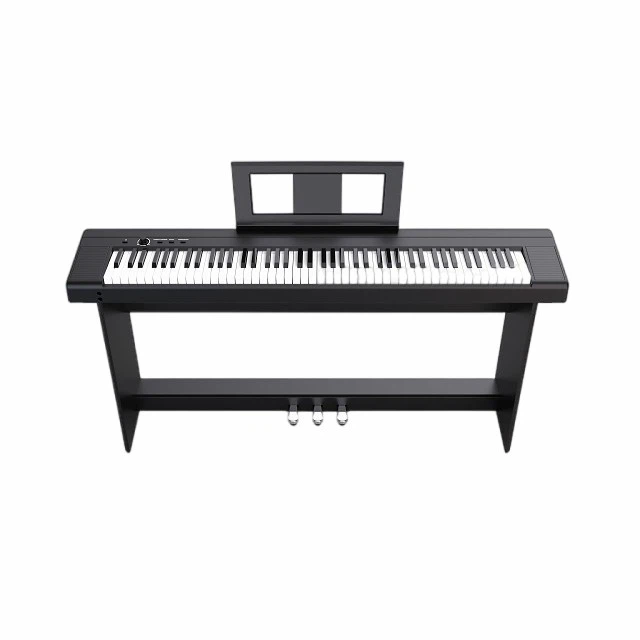
Jazz: Improvisation and Harmonic Sophistication
Characteristic Elements
Jazz keyboard emphasizes swing rhythm, extended harmonies, and spontaneous improvisation. Interaction with other musicians and responsive phrasing define authentic jazz performance.
Recommended Sounds
Primary: Acoustic piano with warm tone, or vintage electric piano
Secondary: Hammond organ with rotary speaker simulation for soul jazz
Optional: Synth bass for fusion styles
Playing Techniques
Master swing eighth-note feel - the "long-short" rhythm that defines jazz. Learn shell voicings (root, third, seventh) for efficient left-hand comping. Practice improvisation using scales, arpeggios, and motif development.
Expert Insight
"Jazz isn't just notes - it's feel," explains Marcus Webb, jazz keyboard instructor in London. "You can play all the right changes and still sound mechanical. Listen to recordings. Internalize the groove. Let your ears lead your fingers."
Configuration Tips
Enable velocity-sensitive organ drawbars if available. Program quick-access registrations for different tune tempos. Use modulation wheel for organ Leslie speed control.
Rock: Power, Texture, and Stage Presence
Characteristic Elements
Rock keyboard ranges from subtle atmospheric support to driving rhythmic propulsion. Distorted organ, synthesizer leads, and piano power chords define the genre's sonic palette.
Recommended Sounds
Primary: Hammond organ with overdrive, or bright acoustic piano
Secondary: Analog-style synth leads and pads
Optional: Clavinet for funk-rock textures
Playing Techniques
Develop strong rhythmic attack for rock comping. Practice octave-based riffs for memorable hooks. Learn to layer sounds effectively without creating frequency conflicts.
Expert Insight
"Rock keyboard is physical," says Tyler Johnson, touring keyboardist in Nashville. "You're not just playing notes - you're driving energy. Attack matters. Stage movement matters. Your performance affects the entire band's intensity."
Configuration Tips
Program footswitches for hands-free sound changes during energetic passages. Use split keyboard with synth bass in left hand for power trio setups. Prepare backup sounds for equipment failure scenarios.
Electronic and Dance Music: Production Meets Performance
Characteristic Elements
Electronic keyboard playing blends live performance with production techniques. Sequencing, sound design, and real-time manipulation define the genre's approach.
Recommended Sounds
Primary: Virtual analog synths, wavetable oscillators, FM synthesis
Secondary: Drum machines, sampled percussion, vocal chops
Optional: Effects processors for real-time manipulation
Playing Techniques
Master arpeggiator programming for complex patterns. Learn basic sound synthesis parameters (filter cutoff, resonance, envelope). Practice triggering clips and loops while maintaining live keyboard performance.
Expert Insight
"Electronic music rewards experimentation," explains David Chen, producer at Abbey Road Institute. "Don't just play presets - modify them. Understand what each parameter does. Your unique sound comes from your unique adjustments."
Configuration Tips
Map frequently used parameters to assignable knobs or sliders. Use MIDI controller surfaces for hands-on sound manipulation. Prepare backup project files for live performance reliability.
Latin Music: Rhythm, Percussion, and Cultural Authenticity
Characteristic Elements
Latin keyboard styles emphasize complex rhythmic patterns, montuno piano figures, and percussion integration. Authenticity requires understanding cultural context and traditional instrumentation.
Recommended Sounds
Primary: Acoustic piano with bright attack for Cuban styles
Secondary: Nylon-string guitar, brass sections, percussion kits
Optional: Traditional instruments like accordion for regional styles
Playing Techniques
Master clave-based rhythms - the foundational patterns underlying most Latin music. Practice montuno patterns: repetitive, syncopated piano figures that drive salsa and son. Coordinate with percussionists for authentic ensemble feel.
Expert Insight
"Latin music is rhythm first," says Maria Santos, keyboard instructor specializing in world music in Miami. "You can play perfect notes with wrong rhythm and sound completely inauthentic. Study the percussion. Feel the clave. Let rhythm guide your harmony."
Configuration Tips
Program auto-accompaniment styles matching specific Latin genres. Use split keyboard with percussion in left hand for solo performances. Save registrations for different regional styles (salsa, bossa nova, tango, merengue).
Classical Adaptation: Tradition Meets Technology
Characteristic Elements
Classical keyboard performance emphasizes tonal beauty, dynamic control, and interpretive depth. Electronic keyboards can approximate acoustic piano experience with proper setup and technique.
Recommended Sounds
Primary: High-quality concert grand piano sample with multiple velocity layers
Secondary: Harpsichord for Baroque repertoire, organ for sacred works
Optional: String ensemble for concerto practice with accompaniment
Playing Techniques
Develop nuanced dynamic control through velocity sensitivity. Practice pedal technique for authentic sustain and resonance. Focus on tone production and phrasing rather than sound selection.
Expert Insight
"Classical playing on digital instruments requires discipline," notes Dr. Rachel Goldman, Professor of Piano Pedagogy at Juilliard School. "The technology can approximate acoustic response, but the musician must provide the artistry. Technique and interpretation remain paramount."
Configuration Tips
Disable auto-accompaniment and effects for pure classical practice. Adjust touch sensitivity to match acoustic piano response. Use high-quality headphones or studio monitors for accurate tone evaluation.
Cross-Genre Skills: Building Versatile Musicianship
Rhythmic Flexibility
Practice playing the same harmonic progression in different rhythmic feels: straight eighths for pop, swing for jazz, syncopated for Latin. This develops adaptability and musical awareness.
Sound Selection Strategy
Create genre-specific registration banks for quick access during performance. Label memories clearly: "Pop Verse," "Jazz Ballad," "Rock Chorus." Reduce on-stage decision fatigue.
Listening and Analysis
Study recordings by genre masters. Analyze keyboard parts for phrasing, sound choice, and ensemble interaction. Transcribe memorable passages to internalize stylistic vocabulary.
Expert Insight
"Versatility comes from curiosity," explains Marcus Webb. "Don't just play your preferred style. Explore others. Each genre teaches something valuable that enriches your overall musicianship."
Real Stories: Musicians Who Mastered Multiple Styles
Daniel Kim, 33, Session Keyboardist, Los Angeles
"I started with classical training but wanted to work in pop and film music. Learning genre adaptation was challenging but rewarding. Now I switch between styles daily. Each genre informs the others. My classical technique helps my pop precision. My jazz harmony enriches my film scoring."
Linda Park, 40, Worship Leader, Seattle
"Our church music spans hymns, contemporary worship, and global songs. I learned to adapt my keyboard approach for each style. Classical voicings for hymns, pop sounds for contemporary, world instruments for global music. Versatility serves the community."
Carlos Rivera, 29, Touring Musician, Barcelona
"I perform with artists across genres - pop, rock, Latin, electronic. Preparation is key. I research each artist's sound, program appropriate registrations, and practice stylistic nuances. Flexibility keeps me working."
Emma Rodriguez, 37, Music Educator, Madrid
"I teach students to explore multiple styles from the beginning. A child who learns pop, jazz, and classical develops broader musical understanding. Genre boundaries are artificial. Music is one language with many dialects."
Michael Chang, 44, Hobbyist and Producer, Toronto
"I produce music in my home studio across genres. My keyboard is my primary interface. Learning genre-specific techniques transformed my productions. Understanding jazz harmony improved my pop arrangements. Studying electronic synthesis enhanced my acoustic recordings."
Common Mistakes and How to Avoid Them
Mistake One: Using One Sound for Everything
Different genres demand different tonal characteristics. A bright pop piano sounds inappropriate for intimate jazz ballads. A warm jazz piano lacks cut for rock arrangements.
Solution: Build genre-specific sound libraries. Test sounds in musical context, not isolation.
Mistake Two: Ignoring Rhythmic Feel
Playing correct notes with wrong rhythm sounds inauthentic. Swing feel, clave patterns, and electronic groove require specific attention.
Solution: Practice with genre-appropriate backing tracks. Record yourself and compare to reference recordings.
Mistake Three: Over-Complicating Arrangements
Beginners often add too many layers or complex parts. Professional arrangements often achieve impact through simplicity and space.
Solution: Start sparse. Add elements only when they serve the song. Less is often more.
Mistake Four: Neglecting Listening
Technical proficiency without stylistic awareness sounds mechanical. Genre mastery requires immersive listening and cultural understanding.
Solution: Dedicate time to active listening. Analyze what makes authentic performances compelling.
Mistake Five: Fear of Experimentation
Sticking exclusively to familiar styles limits growth. Genre exploration expands creative possibilities and marketability.
Solution: Set monthly challenges to learn one new style. Start with small steps. Celebrate progress.
Technology Tools for Genre Exploration
Recommended Apps and Software
iReal Pro: Generates backing tracks in multiple styles for practice
Hooktheory: Visualizes harmonic progressions across genres
Splice: Offers genre-specific sample libraries and loops
Native Instruments Komplete: Comprehensive sound library spanning styles
Hardware Recommendations
Keyboards with extensive sound libraries and style accompaniment
MIDI controllers with assignable controls for sound manipulation
Audio interfaces for recording and production across genres
Expert Insight
"Technology enables exploration," notes Robert Chen of Yamaha. "But tools don't replace musical understanding. Use technology to facilitate learning, not substitute for it."
Building Your Genre Adaptation Practice
Weekly Rotation Approach
Dedicate different days to different styles. Monday: pop phrasing. Tuesday: jazz improvisation. Wednesday: rock energy. Thursday: Latin rhythm. Friday: classical technique. Weekend: free exploration.
Recording and Comparison
Record yourself playing the same progression in multiple styles. Listen critically to identify stylistic differences. Track progress over time.
Collaborative Learning
Play with musicians specializing in different genres. Ensemble experience accelerates stylistic understanding more than isolated practice.
Expert Insight
"Adaptation is a muscle," explains Dr. Emily Chen of Berklee. "The more you exercise it, the stronger it becomes. Start small. Build gradually. Enjoy the journey."
Final Thought: Your Keyboard Is a Passport
Modern electronic keyboards offer unprecedented access to global musical traditions. One instrument can connect you to centuries of artistic expression across cultures and continents.
As Marcus Webb summarizes: "Genre isn't a limitation - it's an invitation. Each style offers new techniques, new sounds, new ways of hearing. Your keyboard is the vehicle. Curiosity is the compass. The musical world awaits."
One keyboardist's post on Keyboard Corner Forum captures the transformation:
"I used to think I had to choose one style to master. Then I realized: why choose? My keyboard can do it all. Now I explore freely. Each genre teaches me something new. Music isn't a destination - it's an endless journey."
📧 Reader Engagement
Which musical style are you most excited to explore on your keyboard? Share your goals and questions at jjbet01@beisite-tech.com a. Selected stories will be featured in upcoming issues.