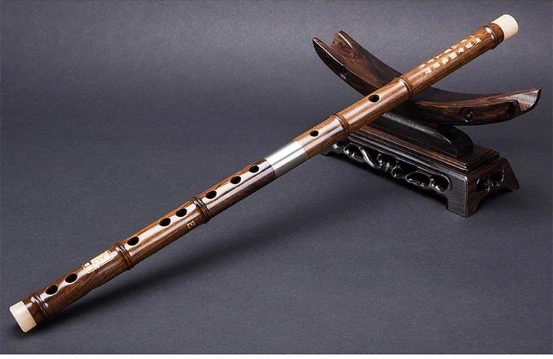
The recorder - one of the oldest musical instruments in Chinese history
Nov 13, 2024
Leave a message
The recorder first appeared around the Shang Dynasty in China. At that time, the recorder may have been a tool used by hunters to emit bird hunting and hunting dog summoning sounds. The straight flute, also known as the Q flute, sheng flute, glissando, etc., is a type of Chinese musical instrument that evolved from the horizontal flute. It is a member of traditional Chinese musical instruments with a long history of development and has been passed down for thousands of years. According to archaeological excavations, a 30 centimeter long straight flute made of agarwood was unearthed in a qin pit during the Han Dynasty (202 BC -220 AD). This recorder is the earliest discovered physical recorder to date.

A recorder is made of bamboo or wood, with a length ranging from 30 to 60 centimeters and a circular appearance. There is a pronunciation port on the flute head, and sometimes there is a decorative flanging. There is a small hole on the tail of the flute that can be opened and closed by finger control. The placement of the sound hole, air hole, and curved mouth of the recorder is fixed and the distance is very precise.
The playing technique of the recorder is very simple, just need to master the correct playing posture and small tricks. Compared with bass instruments, the recorder is lighter in weight, making it easier for performers to carry around and not requiring manual supervision, making it easier for performers to move their fingers and expanding their playing space. In addition to its simple playing techniques, the recorder also has a unique feature: its timbre can express extremely rich emotions. Through different playing techniques, performers can express their colorful emotions such as joy, anger, sadness, longing, and emotion in music. It is precisely because of its strong expressive power that it has been widely used in classical, religious and other fields, becoming one of the important carriers of traditional culture.

The recorder is one of the oldest musical instruments in Chinese history, which has undergone thousands of years of vicissitudes and evolved into a unique form of instrument. It is a unique musical instrument that can even break through language and cultural barriers with a calm and peaceful music, arousing people's thinking and perception. Today's recorder has become an important part of traditional Chinese music and provides a new direction and potential for the development of modern music.