The Soul of Bass: The Harmony Construction and Style Crossover of Bass Guitar
Dec 25, 2025
Leave a message
The full name of the bass is the bass guitar. It is an indispensable low-frequency supporting instrument in modern music, whose core functions are to construct the harmonic foundation and rhythmic framework of music. The origin of the bass can be traced back to 16th-century Europe, with its predecessor being the viola da gamba in the string instrument family. In the early 20th century, the rise of jazz brought the first major revolution to low-frequency instruments. Fender launched the world's first mass-produced electric bass, which solved the problem of intonation control in traditional fretless basses, enabling beginners to master it quickly. In the 1960s, the explosion of rock music brought the electric bass into the public eye completely. From the 1970s to the 1980s, continuous innovations were made in the design of electric basses. Entering the 21st century, the development of digital technology has brought new changes to the bass. The popularization of effectors (such as distortion, delay, wah-wah, etc.) has infinitely expanded the timbre possibilities of the bass.
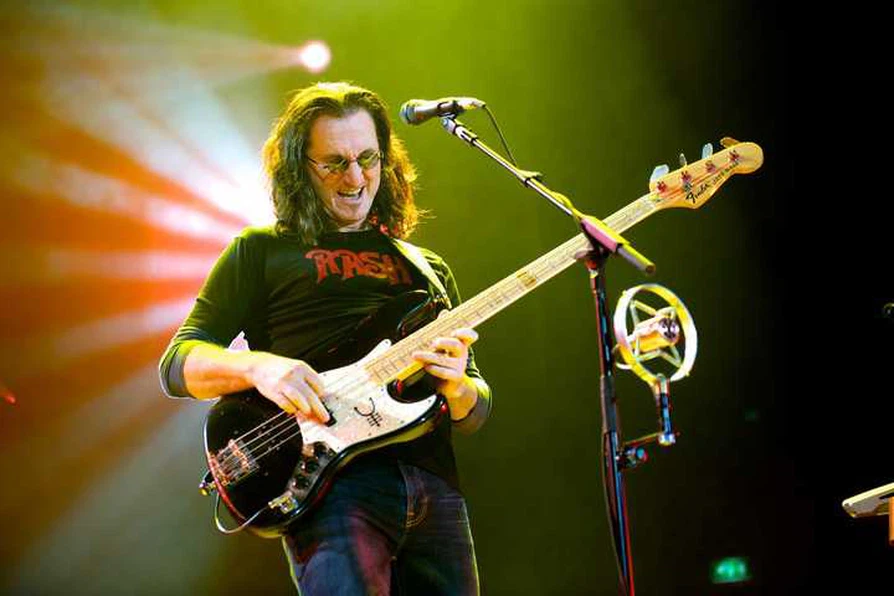
The core characteristic of the bass lies in its wide and expressive low-frequency range. The range of a standard four-string electric bass spans from E1 (41.2Hz) to G4 (392Hz), covering the core low-frequency region perceptible to the human ear (20Hz–256Hz). This range is precisely the foundation of musical harmony-harmonic backbone notes such as root notes, thirds, and fifths are mostly concentrated within this scope. By playing these notes, the bass constructs a stable harmonic framework for music. Root note playing is the most fundamental core technique of the bass-players play according to the root notes of chords, providing the most direct harmonic support for music. This simple and efficient technique forms the basis of genres like pop and rock. Among advanced techniques, walking bass is a core skill in jazz. Through continuous quarter-note progressions, it logically connects chord tones such as root notes, thirds, fifths, and sevenths to form a coherent bass line that not only supports harmony but also drives the rhythm forward.
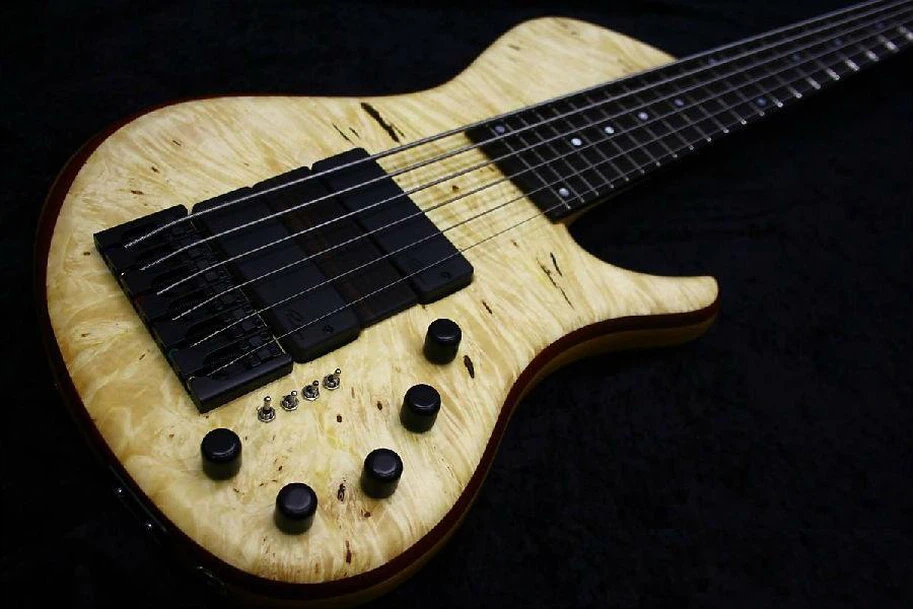
The structure of the bass mainly consists of the headstock, neck, body, strings, pickups, bridge, and other components. The headstock serves as the "tuning hub" of the bass, with built-in tuning pegs. By rotating the tuning pegs to adjust string tension, intonation calibration is achieved. The neck is the "playing core" of the bass, directly influencing playability and intonation. The necks of electric basses are mostly made of hard woods such as maple and rosewood. The body acts as the "resonance and bearing main body" of the bass, divided into solid-body and hollow-body types. Solid-body design is the mainstream for electric basses, typically crafted from woods like maple, basswood, and ash. Without a resonance chamber, it effectively reduces external interference, enhances timbre purity, and lowers the overall weight of the instrument. Hollow-body basses, on the other hand, imitate the structure of acoustic basses with built-in resonance chambers, producing a warm and natural timbre suitable for genres like jazz and blues. However, they are larger in size and prone to feedback squeal. Pickups are the "sound-generating core" of electric basses, functioning like microphones to convert string vibrations into electrical signals. While the core function of the bass is "support and connection", technological advancements have expanded its role far beyond the single positioning of "low-frequency accompaniment", evolving it into a versatile, cross-genre instrument applicable in almost all modern music styles.

As the "low-frequency cornerstone" of modern music, the cultural significance of the bass lies not only in the instrument itself but also in its role in driving the evolution of musical styles and the development of the music industry. Bearing a century of historical memory and boundless future potential, the bass will continue to write legends in the low-frequency domain, infusing human musical life with profound and enduring power.